
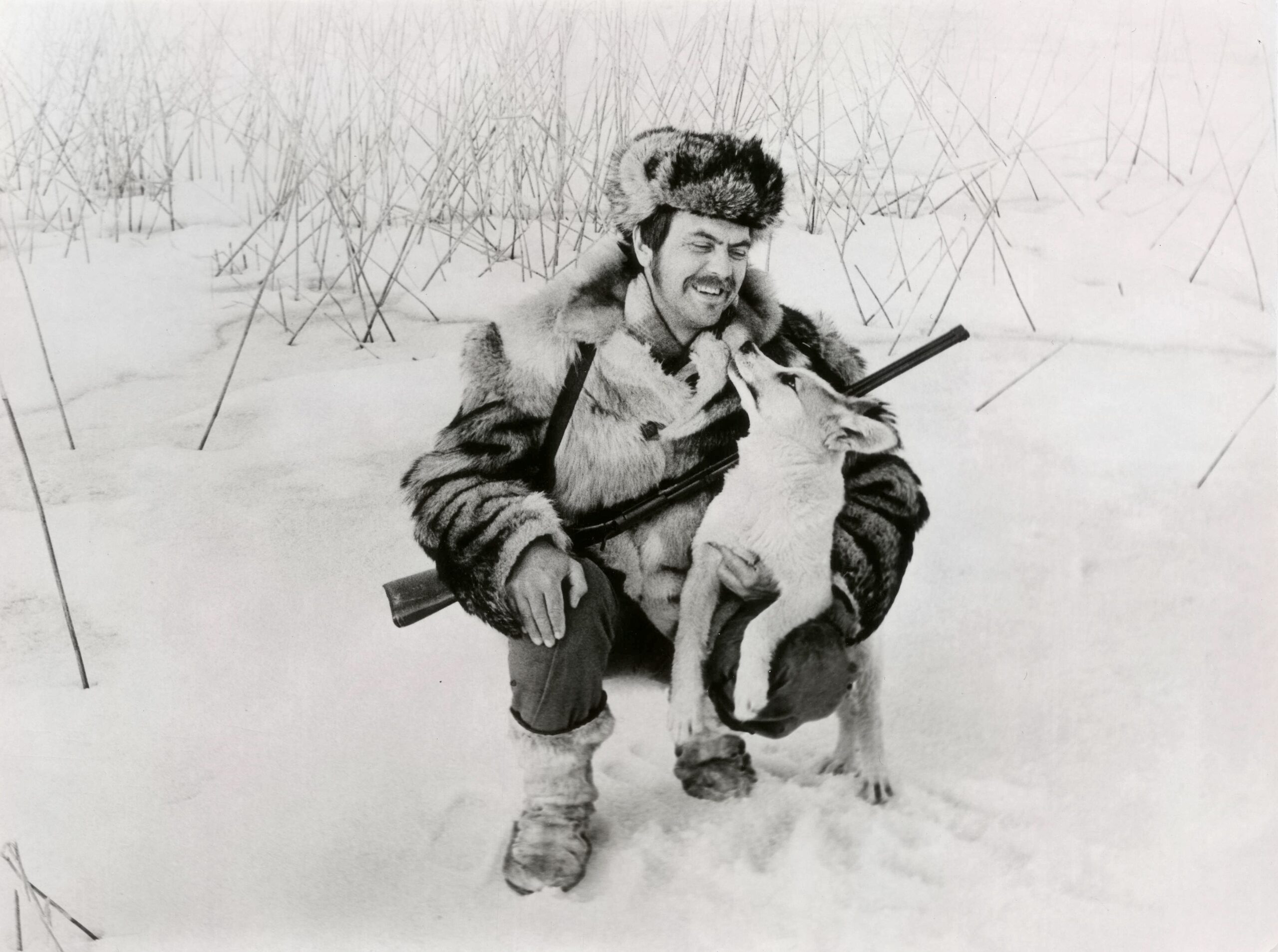
A conversation with Guillaume Gibert and Aurélie Charron on translating and publishing the French edition of Nikolai Baturin’s Cœur d’ourse
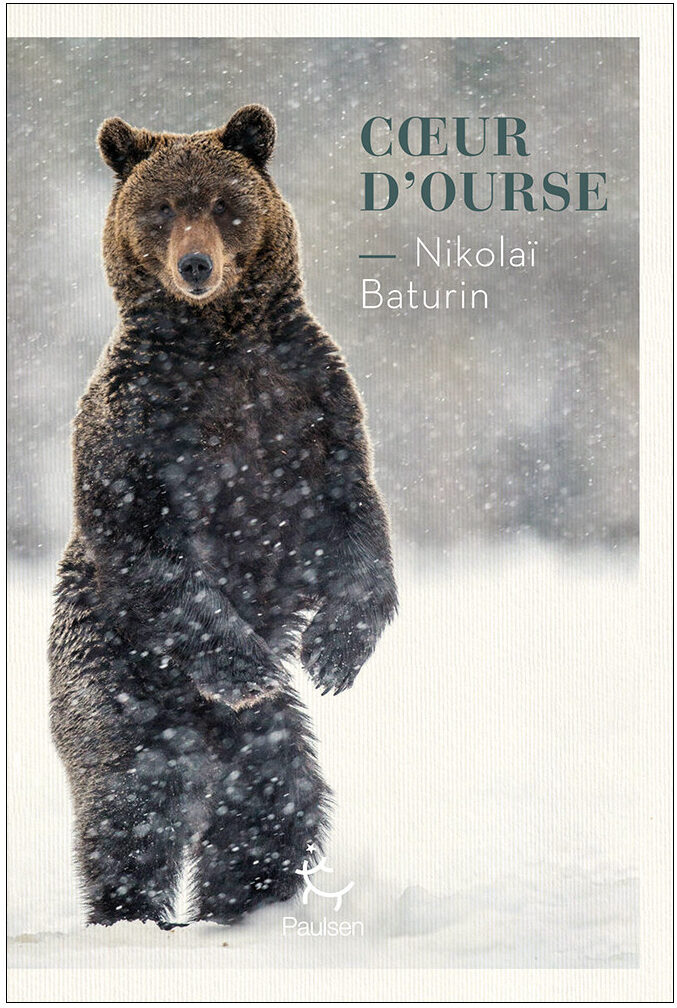
After the extract from the opening stage of Nikolai Baturin’s Karu süda (The Heart of the Bear) in this issue of EstLit, the conversation turns to the novel’s French afterlife as Cœur d’ourse. EstLit introduced the French edition online in Philippe Villard’s review, ‘The Trapper’s Epic’. In the following interview we discuss the labours of translation and the editorial gamble of taking on such a work with translator Guillaume Gibert and publisher Aurélie Charron at Éditions Paulsen – and the strange, lingering force the novel seems to exert on its readers.
Kristjan Haljak: Before turning to more technical questions, how did your personal encounter with Cœur d’ourse come about? What struck you on first reading?
Guillaume Gibert: For me, the encounter was pure chance. Shortly before the translators’ seminar in Käsmu in 2022, I received an email from Elle-Mari Talivee at the Estonian Literature Centre asking whether she might pass my email address on to a publisher. I agreed, and shortly afterwards Aurélie Charron at Éditions Paulsen got in touch and asked me to prepare a reader’s report on a novel I did not yet know: Nikolai Baturin’s Karu süda. As there was no digital version of the text, she sent me a copy. I later bought another copy during a stay in Estonia.
What struck me at once was Baturin’s fascinating language. It was unmistakably Estonian, yet another kind of Estonian altogether: extraordinarily rich and poetic, a world unto itself – a true avarilm, a vast linguistic universe – even if it could at times be difficult to penetrate. Then came the world that is opened up to the reader from the very first pages: the reader is transported to the taiga with Niika and the Evenks. I was also moved by the book’s philosophical depth and literary originality.
Aurélie Charron: The novel had been recommended to Paulsen by Antoine Chalvin, a French scholar and long-time translator of Estonian literature, who knew that in our La Grande Ourse collection we wanted to reveal works rooted in nature, precursors of a European form of nature writing. Fascinated by bears, I was intrigued by Baturin’s title alone. What proved decisive was Guillaume’s sample translation: he had translated around thirty pages without knowing whether the novel would ever appear in French.
Baturin’s writing, limpid and sensual, seemed to bring the taiga to life. It excelled at describing the character’s inner life while allowing the infinitely large and the infinitely small within the Open to coexist. Without realizing it, I had already begun to walk alongside Niika.
KH: Did you feel, reading Baturin, that you were dealing with a singular work, difficult to compare with contemporary literature? In what sense does Cœur d’ourse seem to you singular, even unclassifiable?
GG: It is a unique book. From the first reading I felt that I had never come across anything like it and that it had to be translated so it could be shared. Karu süda is a kaleidoscope of genres: poetry, song, theatre, the novel, aphorism, philosophical reflection and so on. It is also a kaleidoscope of styles, tones and registers: there are passages filled with humour and others that are very serious, even grave; one hears villagers, hunters and the highly distinctive language of the Evenks.
The formal choices are equally striking: the eighth stage (peatus), which runs to around fifty pages in my edition, is written in the conditional mood; the third is written like a play. Time and space become blurred, and Emili remains elusive. The reader has to accept being swept along by the novel’s current. This singular taiga world opens on to a universal dimension and makes the book unclassifiable.
AC: Cœur d’ourse is unclassifiable in more than one respect. Its eleven stages each reveal one aspect of Niika’s humanity: a young man chooses to live in the taiga in the hope of finding his soul. The reader follows him on an odyssey that is as much a spiritual journey as an adventure. What strikes me is the richness of a novel written with great patience in the solitude of a cabin. It could only be the work of a trapper, a shaman or a hermit – in short, someone who withdraws from human time and submits to the seasons and the rhythms of nature. Novels on this scale scarcely exist today. Few writers now make a living from writing. Most write in the gaps in their schedules; they have too little time to devote to literary creation and almost never experience the prolonged solitude that allows writing to unfold fully. The slow maturation of Cœur d’ourse helps make it a work apart. Baturin excels at making us feel how differently time passes in the village and in the forest, and Niika comes fully into himself only within the expanded temporality offered by the discreet companionship of trees.
KH: The language is deeply poetic and sensory, infused with animism and a profoundly embodied relationship with the world. What were the main challenges, and also the joys, of translating it into French?
GG: Translating Cœur d’ourse was a real challenge, and the French version owes a great deal to Pierre Présumey, a French poet and writer, for his careful rereading and to Aurélie’s immense editorial work.
Understanding the text was often a delicate matter. At the end of each ‘stage’, I would return to the first version of the translation and draw up questions about language, meaning or interpretation, which I would then send to the Estonian writers and literary figures Lilli Luuk, Berk Vaher and, at times, Tiit Aleksejev, whose help was invaluable. Each of them responded with extraordinary kindness. In this search for meaning there was a first joy: deciphering. That was the word Tiit Aleksejev used of Baturin in one of his emails: ‘Even Estonian authors struggle to understand Baturin; translating him is probably a true act of deciphering.’
The other joy, perhaps still greater, was creation. Baturin’s language is extraordinarily rich, and musicality comes first. One had to preserve alliteration and rhythm, or find other resources when French lacked the descriptive sound verbs available in Estonian. For instance, when rendering pupepaljalt, it seemed impossible to keep the echo of ‘doll’ (pupe) in French, so I finally chose nue comme une nymphe (‘naked as a nymph’). In another passage, thinking of Aloysius Bertrand’s poem ‘Ondine’, where the opening lines contain the words moire and ‘the beautiful starry night’, as well as a highly wrought rhythm, I tried to create a certain music in the French sentence, one that would support the images. This led to: ‘The moon would rise into the sky, revealing the sounds and colours of the bog. When Niika moved away from the fire, he would hear the music of the frost in the moiré of the night and the crackling of the frozen snow, muffled like the shaman’s blows on the skin of the drum.’ The names of plants and flowers were another difficulty: in Baturin’s Estonian they become almost poetic – karukelli, koldkannikesi, ehalilli – names whose compounds evoke images such as bears and bells, and the glow of evening. It is difficult to preserve that effect, but with kaljupuju the Latin name Artemisia rupestris made it possible to create the French armoise rupestre.
One might think Karu süda an untranslatable novel. But, as Nganassaan says to Niika when Niika asks him, ‘Can anyone be a human being twice?’ – ‘No one can be one even once,’ he says. ‘But one must try.’ Here too, one must try.
AC: Guillaume had the difficult task of giving Baturin a voice in French. Cœur d’ourse has a hybrid language enriched by Russian, Even and Evenki. We had to preserve the rawness of Tungalpähkel, the sage of the taiga. His form of expression could not be altered by modernity or misplaced sophistication; we had to sustain the impression of a language of origins. Among the great joys, I remember the enchanted enumerations of everything that lives and breathes in the taiga: ferns, mosses and lichens, names that carry the beauty of lands rarely walked by humans. As Guillaume and I worked together, certain translation choices gradually became clear. I tried to choose the solutions that remained closest to the original text, as if Baturin himself were there to decide. Sometimes I felt as if Baturin’s ghost were reading over our shoulders. This translation was truly an experience unlike any other.
KH: From an editorial point of view, did publishing Cœur d’ourse feel like an editorial gamble? How did you think about its place in your catalogue and its encounter with French-speaking readers?
GG: It is difficult for me to answer this question.
AC: Of course. Translating a deceased author, never translated into French in his lifetime, is not a common undertaking. Cœur d’ourse was published in 1989. It is a classic of Estonian literature but also a literary UFO. It runs to nearly 700 pages, and readers have less and less time to devote to reading. Beyond 350 pages, publishers themselves become cautious, since printing and storage are expensive. The success of a novel such as The Housemaid makes it clear that recent commercial successes tend to come from genre and entertainment fiction. Baturin’s novel is diametrically opposed to market trends: a demanding spiritual odyssey, not genre entertainment. It does not meet the expectations of the general public, and it seemed almost kamikaze to me to bring this spiritual odyssey to readers more drawn to the adventures of ‘new romance’ than to the movements of the soul. In short, I knew I was defending a text with little chance of finding its place in the market, but an editor’s mission is also to protect masterpieces in danger of falling into oblivion. Beyond its literary qualities, this novel can transform the person who reads it. That is what convinced me.
KH: How do you gauge the French reception so far? Have any responses particularly stayed with you?
GG: I remember Pierre Présumey rereading the sixth stage and calling me several times, enthusiastic, to tell me how powerful the chapter was. I also remember my sister’s emotion at the final page: she told me she had wept in the river and with the she-bear. Among critics, Philippe Villard’s fine and sensitive article touched me deeply. He perceived and conveyed the extraordinary character of the novel. I wrote to thank him for his work, and we continued to exchange a few messages. It is moving to see that a book can make this kind of encounter possible.
AC: As soon as it appeared, Elena Balzamo reviewed the book in Le Monde des Livres, and booksellers gave it a favourable reception. My task was to make them understand that this was not simply a ‘new release’ but a book of depth, a timeless novel comparable to Arseniev’s Dersu Uzala: Estonian literature had its own Jack London. We very rarely receive feedback from readers on the books we publish. Among those close to me, this novel was widely praised. The response that touched me most was a letter from a reader we received at the office in January 2026. She wrote of the ‘immense wonder’ inspired by Cœur d’ourse. In the depths of winter the book seemed to have helped her overcome a painful bereavement. After travelling with Niika through the eleven stages of his inner journey, she felt she had undergone a kind of moulting.
KH: Looking back, how does Cœur d’ourse continue to accompany you?
GG: For me, there is a before and after Karu süda. Translation requires an intimacy with a text that leaves traces and resonates within us. This was the first time I’d translated a novel of such scale, a true initiation, and one that, as such, transforms. I feel fortunate to have walked with and within this book, which opens out on to a vast world of its own. I think of the Latin traducere, to lead across or beyond. If I translated the book by giving it a French voice, perhaps it also translated me: it carried me further.
AC: After walking with Niika over the course of this long journey, one that brings him to fulfilment as a man, and after immersing myself in Baturin’s writing and gaze, it seems to me that my way of reading the world has been altered, as if after an initiation.
This singular text has left a deep imprint not only on my path as an editor but on my soul. Since Cœur d’ourse, life seems more alive to me.
ABOUT THE CONTRIBUTORS
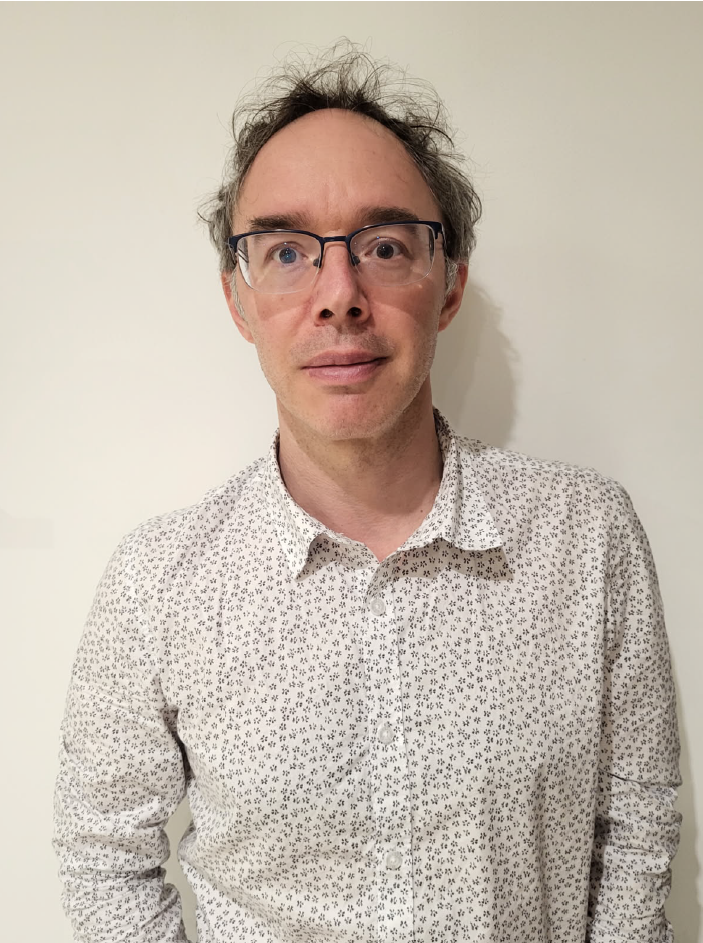
Guillaume Gibert is a French translator from Estonian. His translation of Nikolai Baturin’s Karu süda was published as Cœur d’ourse by Éditions Paulsen in 2025, bringing one of the stranger monuments of Estonian prose to French readers.

Aurélie Charron is a commissioning editor at Éditions Paulsen. She is involved in La Grande Ourse, the publisher’s fiction series devoted to wild places and exploration. She commissioned Guillaume Gibert’s French translation of Nikolai Baturin’s Cœur d’ourse.