
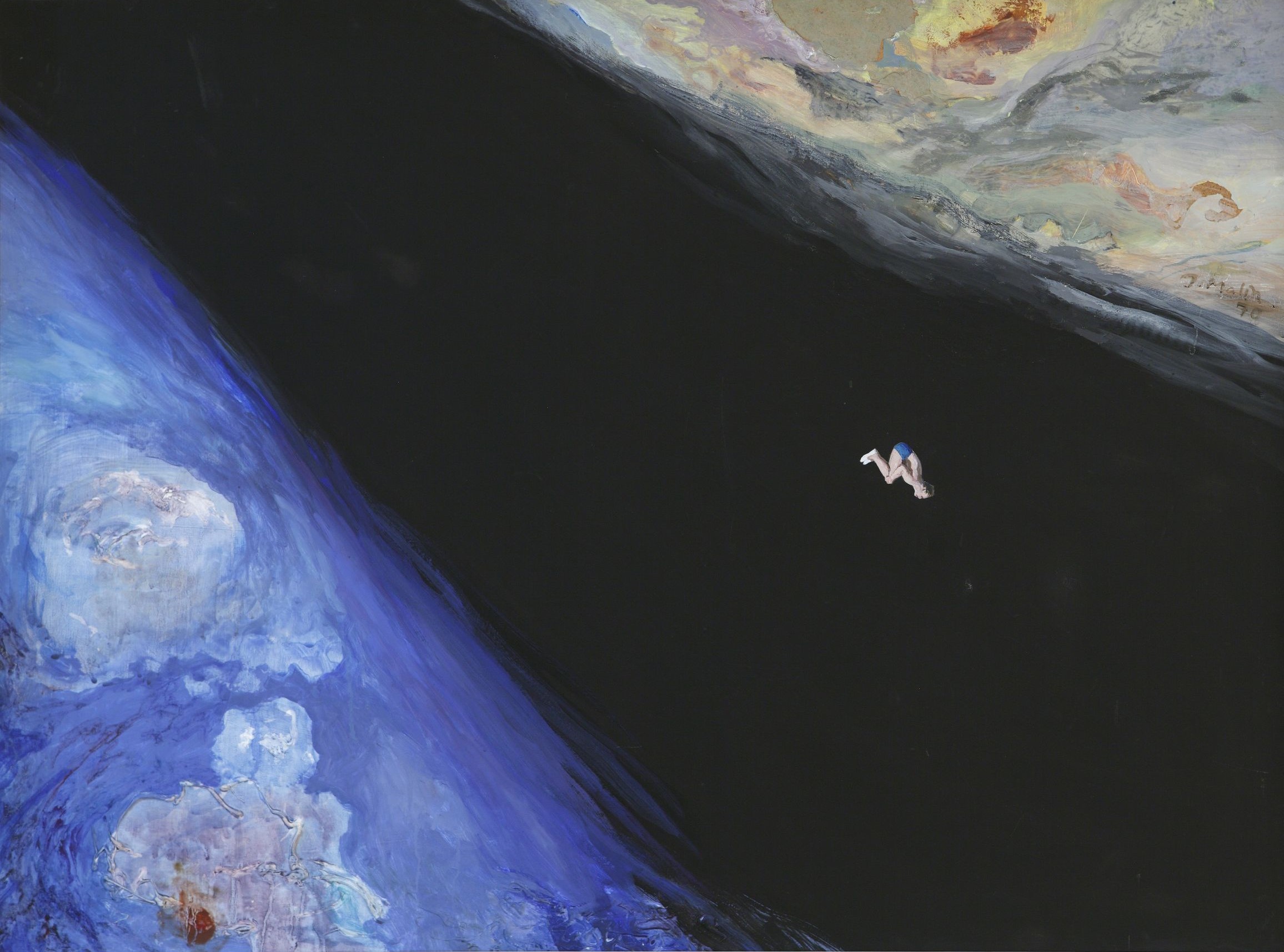
What is this, the leaves already yellow by the end of August, fluttering about madly in random gusts, landing by the roadsides, gleaming there until the first rain? The rowans glow as if they’d been drinking blood, the magpies gloat and the aspens quiver nervously. What is this, everything rushing towards death, decomposition and decay, with even the most thriving of plants rotting? I know it’s not giving up; it’s knowing how to rest at the right time. Yet I still look at it in the only way I can: everything is fading away and preparing to die.
The sun shines in on to the kitchen table. There’s a lone banana in the fruit bowl. I’ve been watching it for days now. At first it was hard and unripe, but over time the softer and sadder its body became: brown spots appeared, and they merged – pigment blotches. It’s become an overripe squishy fruit, far from its tree. The only thing it’s good for now is mashing with a fork and putting in a cake. If I had the strength. If I were willing to take that decaying matter into my hands. It’s too late for that, though. I don’t think I could do anything else.
It’s always too late for everything.
I sliced my heart into pieces and buried it.
Maybe something will grow out of it one day. A saltbush. An apple tree. A daisy.
Corridors, endless corridors. I can’t shake the thought of them off, I can’t get them out of my head, there’s just no way I can, corridors with green walls, you know, that revolting shade of green, I don’t rest, I don’t sleep, because every time I fall asleep they reappear. Those corridors, at the end of which I hear crying, the heart-rending crying of a child, long, bleak corridors. It’s my child, and I must, I must reach her. But I don’t. Or sometimes, when I do reach her, she’s silent and looks at me accusingly or looks away. ‘You’re not my mother,’ she says. ‘I don’t want a mother like you.’ ‘But you’re my child, mine.’ And then there are only tatters of clothing in the cradle, rags; then there is a body swelling red and purple in the cradle, flaky skin; then there is emptiness in the cradle.
So here I lie. Sometimes in bed, sometimes on the cold bathroom floor. Sometimes I wake up in odd places. On the windowsill in the hallway, a jacket for a blanket. Curled up under the big desk. Or simply on the floor. My body’s like a stocky tree, buckling under its own weight, unable to do anything. With no strength. Thoughts flow out of me and move onwards, sticking to the floor like resin. Everything peels off, crackles, rattles.
Maybe I’m no longer human. Just a pile of junk. I’m hands, skin. I’m back, muscles, brittle fingernails. I’m a tongue, I’m all tongue, pink and a little rough, covered in taste buds, a fleshy tongue glistening with saliva, slimy and incapable of speech. Far from everything. I can lick, though. I’ll lick you and find out who you are. Floor. Wood. Skin. Dust. I’ll lick you until my tongue splits open. The pain tells me something’s still there. Whose pain is it? Not mine, because I’ve been hollowed out from within. I no longer feel a thing. I don’t want to feel. Inside me lives death. I’ll lick you like a mother cat. I’ll lick you to death.
I collect the dead. They live inside me like parasites. They feed on my body. I have an entire collection of them. Want me to show you?
Someone hands me a tiny glass marble. A man with large grey eyes. I didn’t notice him arriving. I hesitate. I don’t trust him. Instinctively I tense. But I take the marble, it’s beautiful, so perfectly round in my hand. It has green and orange splashes of colour inside it. At once I forget everything. But when I look up, I realize. His eyes are a predator’s. My fingers can’t hold the gift; the little marble falls, rolls along my sloping floor and under the sofa. ‘Leave me alone,’ I scream. ‘Leave me alone. I didn’t ask you for anything. I don’t want anything from you! Don’t take me anywhere! Don’t let them tie me up!’ There’s not the slightest hint of human in what I scream, it’s the roaring of a fist, a yelling of the temples.
He doesn’t touch me. Just looks. Says something. I don’t listen, because words are poison. Words compel people to do all sorts of things they really don’t want to do. I stuff my ears with paper towels, squeeze my eyes closed and feign sleep. The person clatters around in another room for a while and then leaves, locking the front door. A bit of peace and quiet all the same.
I sigh with relief when dusk starts to fall. The dark is easier to deal with than light and colours. And I think of your beautiful, peaceful face: the small dark-purple lips, bluish skin, only the tip of your nose was beige. The eyes that stayed shut. No, I don’t want a mauve sunset! Dusk falls at last just the same, and now only the bare outlines of things can just be made out. That’s good. That way they can’t look at me with hostility. In the dark, the room gradually turns into a monochrome cocoon.
But peace doesn’t come. There is no peace. There’s a storm outside. I hear it raging. It mauls the trees, lightning bolts tear at the gloomy expanse and slice through the darkness. These are strange hieroglyphics, dangerous tidings I don’t understand. The rain lashes against the window, loudly, incessantly, to a drumbeat. Fists. My stomach starts to ache. Prickly bushes and nettles are growing inside it. It’s uneven ground full of weeds and invasive plants. Birds’ heads grow out of my breasts, worms twist between their beaks, arms reach out from my hips, grabbing whatever they can, grabbing at the air, grabbing furniture and pulling me down. Good thing no one’s watching. It’s already too late for everything. My lovely body, my hairy, bubbling, terrible body is grown over with twigs, leaves and decay. I’m becoming attached hair-like to the ground.
I am springy and soft, like moss. I am still here.
I am merely a thought, even though I would have liked to have stopped thinking long ago. Maybe plants think, too, though, and maybe it’s completely inevitable, inescapable for me to be thought, to be decaying matter. My hands keep on fumbling. They slide out for a while, then wind themselves back in, twisting like ivy, looking for somewhere to grip on to. Something is budding inside me, filling the hollows under my skin, in my stomach, womb, my bones and eye sockets. It swells and pulsates, beating inside me like a drum. Shoots are breaking up my bones, there are buboes in my armpits and trichomes appearing on my legs. Ants march along my thighs. An autumn gnat hums contentedly at the window. My palms are burning. A lump forms in my throat. I try to spit out the lump, but it’s so big, it comes from very deep within. It swells, rises and gurgles and at last it fills my entire mouth, and out of me bursts everything that I am not.
Translated by Darcy Hurford
ABOUT THE AUTHOR
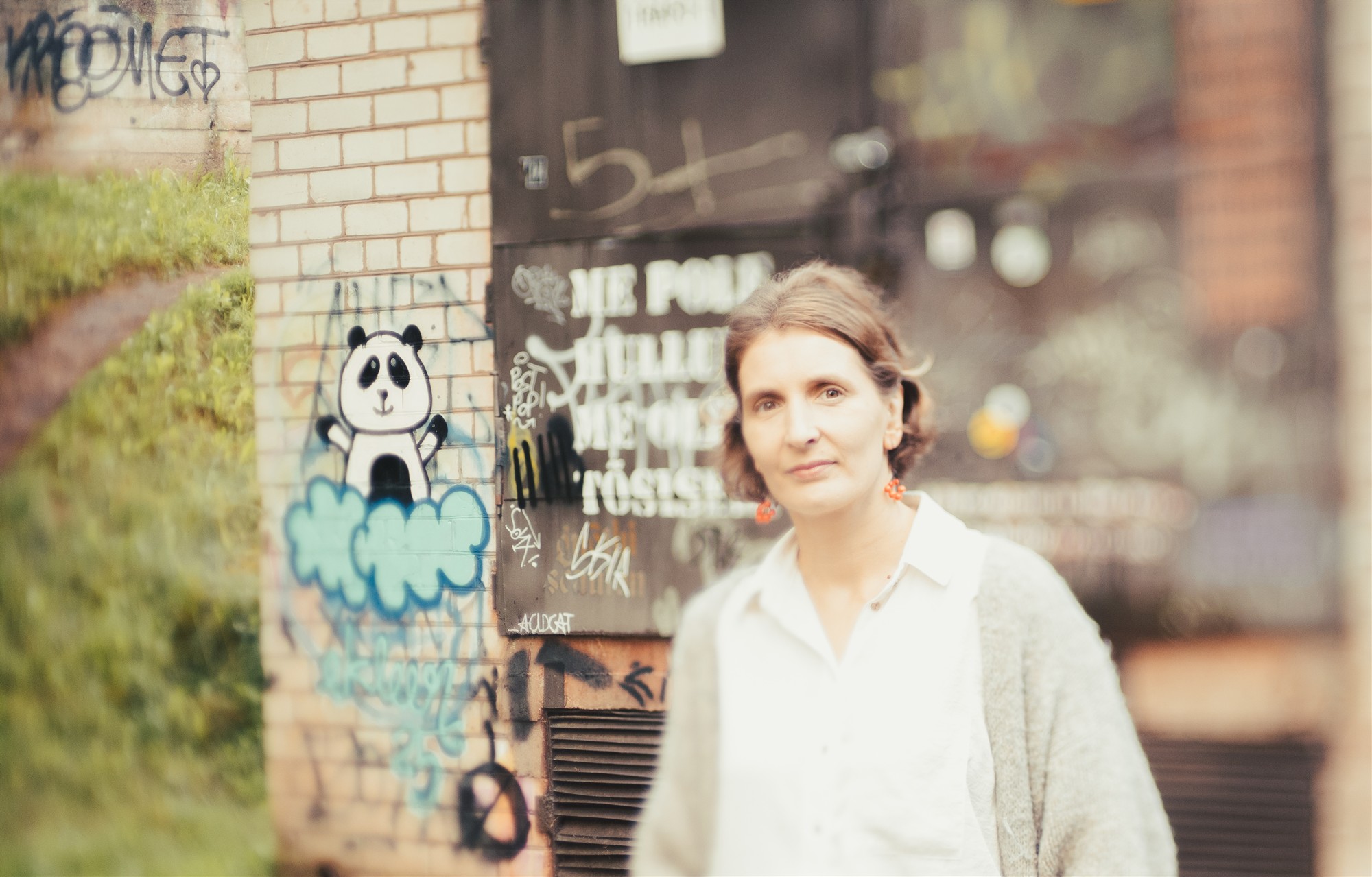
Carolina Pihelgas (b. 1986) is a poet, prose writer, translator and editor. Her collection Valgus kivi sees (The Light within the Stone, 2019) received the Cultural Endowment of Estonia’s poetry award, and her short novel Lõikejoon (The Cut Line, 2024) won the inaugural Estonian Women’s Literature Award. In 2026 she became editor-in-chief of the literary monthly Looming.