
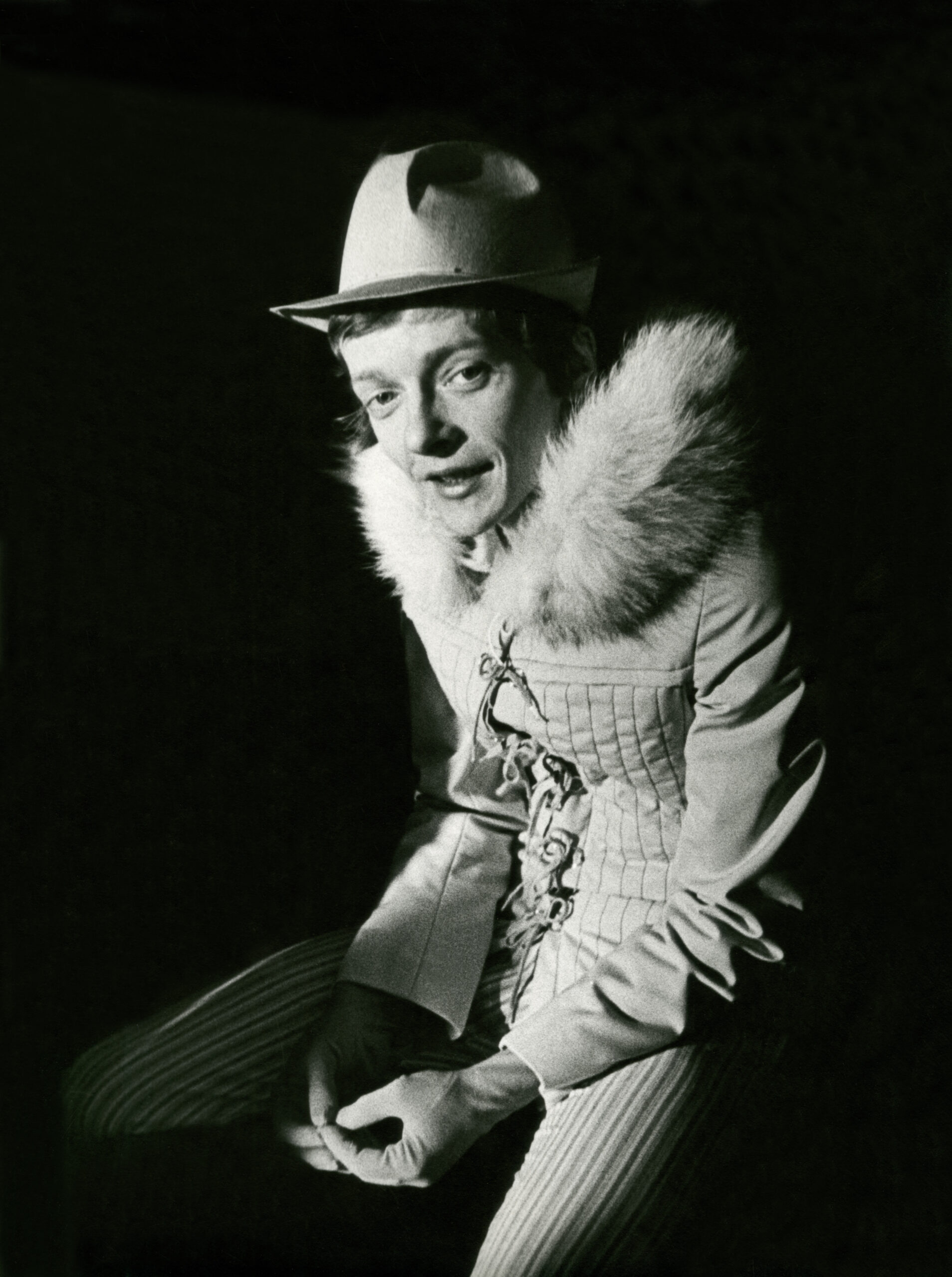
Juhan Viiding (1948–1995) ranks among the major innovators of Estonian poetry, its so-called poetic revolutionaries. In his work – Viiding was a well-loved actor as well as a poet – everything turns on the relation between two names, Jüri Üdi and Juhan Viiding, the poetic nom de plume and the living person behind that pseudonym.
This split also registers a need – psychoanalytical or practical, if the two can really be separated – to step away from his father’s name: Paul Viiding was himself one of the major poets of his own generation. The Üdi books of the early 1970s – Närvitrükk (Nerveprint), Detsember (December), Käekäik (Fortunes), Selges eesti keeles (In Plain Estonian) and Armastuskirjad (Love Letters) – signal one of the sharpest breaks in modern Estonian poetry.
Together, these collections form the marrow of a new subjectivity. (The word üdi means ‘marrow’ in Estonian, and the name makes that pun unavoidable.) Later in his career, Viiding’s own voice comes through more overtly, taking on a more inward, existential register, though the Üdi element remains at the nerve centre of his poetry. This selection here concentrates mainly on texts published as Üdi and ends with a poem already leaning towards Viiding’s later light.
Two of Viiding’s most attentive readers, Joosep Susi and Hasso Krull, who have both written afterwords to his collected works, help to name the force of this poetic shift. Susi has written about the snag at the root of Üdi’s poetry: an inner disturbance, a point of resistance. Krull, a poet and literary scholar, has described ‘Üdi-ness’ as a revolution in poetic language, in which ellipses, contrasts and abrupt transitions create a fertile imaginative space for ideas to take shape. Drawing on an image from Üdi, Krull sees this poetic subject as a realist angel: a sober, allegorical seer caught in the everyday, whose gaze makes the ordinary world suddenly uncanny.
The ‘fire window’ in the title to this piece is a poetic image that opens a passage into other layers of existence: ‘Behind the glass is fire, / beginning and end of light’. In this sense, his poetry can be read as carrying a strong surrealist substratum, even though surrealism was never an explicit programme for Viiding. His work shaped a defamiliarizing and dissident angle on reality – or, more precisely, brought a new one into being.