
In one of his most personal works to date, Andrei Ivanov writes about his mother’s final days and the impact of the war in Ukraine on Estonia’s Russian-speaking community.
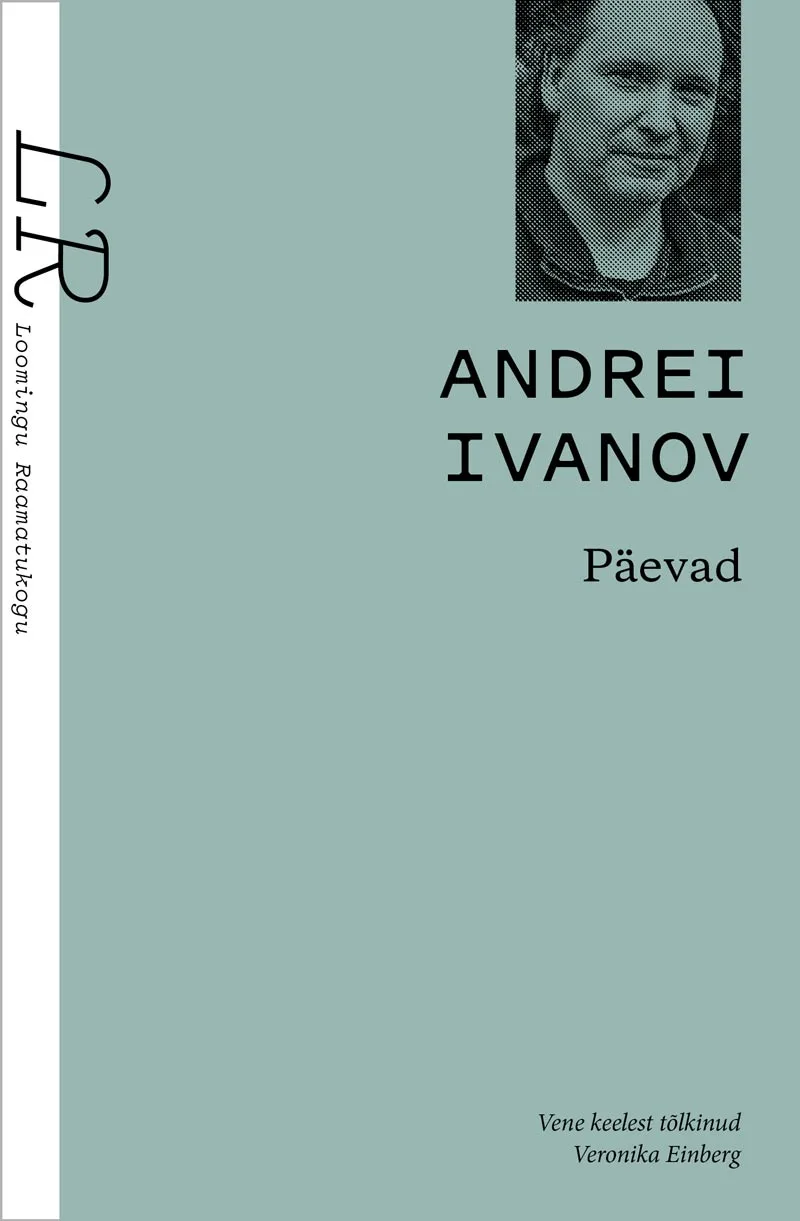
Päevad (The Days) is undoubtedly among Ivanov’s more intimate novels. One can only imagine how harrowing it must have been to sort through the layers of culture and memory in his dying mother’s flat. Those who have gone through a similar experience with a loved one will understand: returning to a life long ago left behind, walking once-familiar streets, leafing through photo albums, feeling anger and grief well up in turn … The author makes no attempt to romanticize his youth.
Even in his earlier works, Ivanov’s version of Kalamaja – a historic wooden-house district in Tallinn – has always been a dark, criminal quarter, more reminiscent of early-20th-century slums than of the stylish neighbourhood it is often seen as today. There’s no trace of the present-day charm one might expect from the area, or from Telliskivi, a now-gentrified former industrial district in Tallinn, which also appears in his books and is derided by him there as a symbol of hipsterism and superficiality – the bijou cafés and boutique shops have long since spread across Estonia and, indeed, the world.
Ivanov’s Kalamaja is, of course, far more interesting – although there is something comforting about being able to walk through the neighbourhood today without constantly looking over one’s shoulder as one would have in the 1990s and early 2000s. I agree with Sandra Jõgeva’s review in Areen, where she claims that the real protagonist of the novel is Tallinn itself – a city rarely explored in depth in Estonian literature. The narrator’s trajectory – from Sõle Street in a working-class district, through the medieval Old Town, to the vast Soviet-era housing estates of Lasnamäe – covers a significant stretch of the capital.
A person travelling by bus sees more than the typical urban Estonian, whose life unfolds mostly from behind a steering wheel in traffic. Shady characters, snot-grey weather outside the window – in short, reality. Ivanov records this shabbiness faithfully, exposing the class divides in Estonian life. There are also recollections of aimless wandering through the streets of Copenhagen – bringing to mind my own drifting through Berlin, where the pavement often felt like the most welcoming place of all.
I’ve mentioned this in a previous review of Ivanov’s work, but it bears repeating: his greatest contribution to Estonian literature is his sobering, sideways glance at local life. He holds a mirror up to Estonians, revealing the shadow side of their psyche. For Ivanov, the 1990s are not a time of nostalgia or retro parties, but a bleak chapter of artistic self-searching. At times, he was so alone that he invented an imaginary interlocutor.
Ivanov writes that his readers are not Russians, but Estonians. He is an Estonian writer through and through – especially following the outbreak of the war in Ukraine – and he even feels ashamed that he ever published anything in Russia. ‘Fucking Rashists – you’ll never wash off that disgrace,’ says one of his friends in the book. The anger and shame felt by progressive Estonian Russians in response to the war has been acknowledged in the Estonian media, but for many Estonian Estonians it remains unfamiliar territory – another world entirely.
Above all, however, this is a novella about Ivanov and his mother, with the chaotic Tallinn of the early 2020s as a backdrop. Ivanov is a writer with a capital W; when reading him you can never detect the slightest whiff of self-promotion – as he puts it, ‘I’ll never understand materialists’ – only a sincere desire to pour his feelings on to the page.
Peeter Kormašov