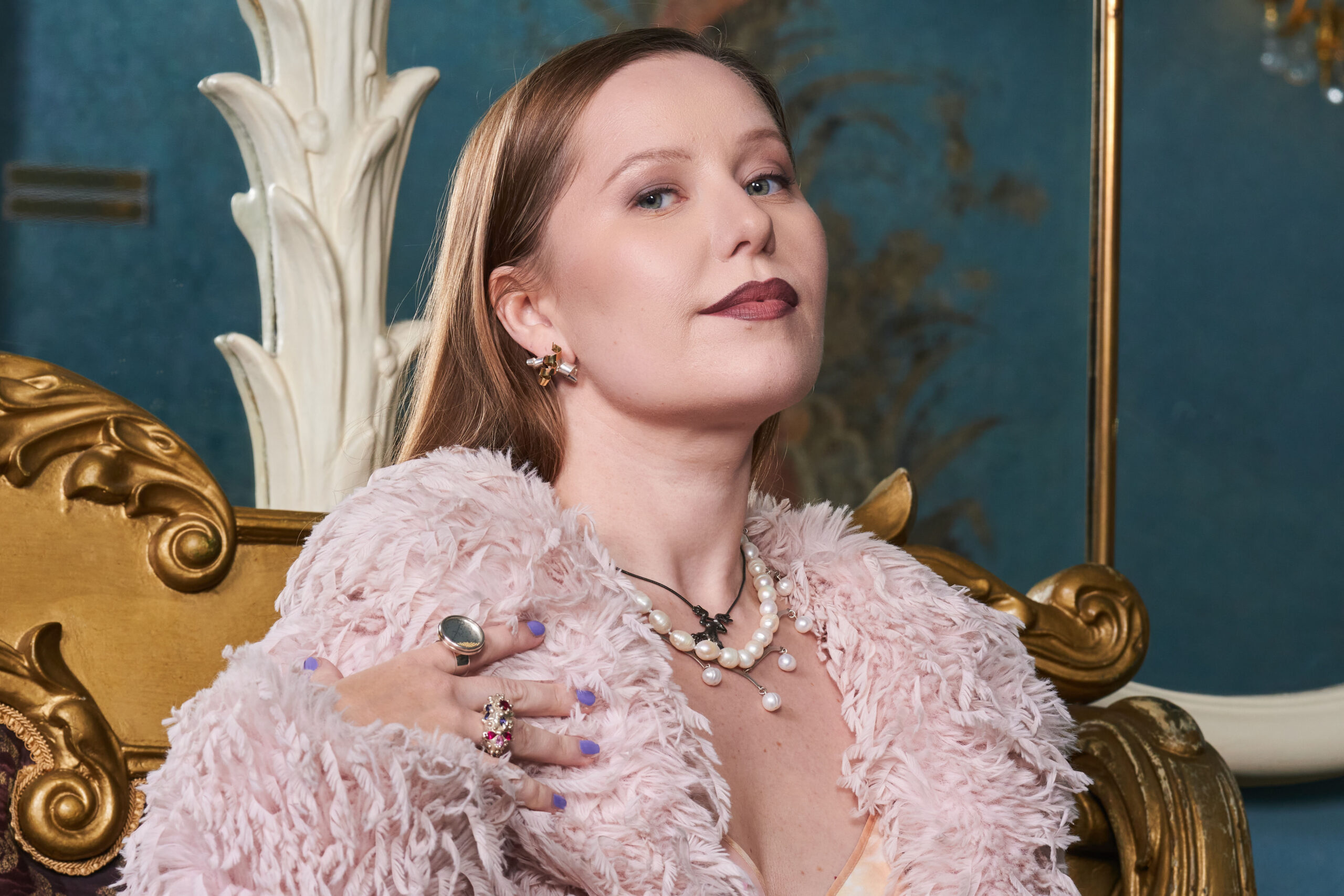
I am with Sveta Grigorjeva on a cold, pastel-peach spring evening in Tartu, where she’s just finished taking part in a round table on politics for University of Tartu MA and PhD students. She’s come to Tartu from Tallinn, where she lives with her two cats Plika (Lass) and Ruuben. We meet at Town Hall Square and go for dinner in an Irish pub, which, this particular evening, is flooded with students on a pub crawl. We both like the vibe. We speak of her work and her current PhD research at the Estonian Academy of Music and Theatre. Her doctoral project centres on the politics of form – specifically on how theatre can be ‘done’ in a collaborative way. We speak, too, of the menu and beers and how coffee often smells better than tastes, how it’s the ritual of boiling it and waking up to this ritual in the mornings that makes it special. We speak of the pleasures of academic reading, of the constant care work women have to take on, of how it really is the smallest, most intimate things – such as one’s books and friends and cats – that make life worth living. We also acknowledge how utopian the small pleasures of life often remain for many, because they are economically unattainable or because many societies still dictate who one can love, which genders and sexualities and bodies are acceptable and what is considered appropriate for different genders and gender expressions.
We also mention Virginia Woolf a couple of times, and I start to think of Woolf’s wondering in ‘A Sketch of the Past’ about how a biographer has to leave out innumerable forces and impressions that make up the person under scrutiny. Grigorjeva might not be under scrutiny by biographers (yet), but her work – which is frequently conflated with her as an individual – is often discussed, wins awards, and her opinions and essays appear in popular newspapers. In Estonia the name Sveta Grigorjeva has come to signify resistance to stagnant systems and forms, youth, experimentation but also provocation. Although she has her own community and people who admire her work, right-wing conservatives associate her with angry feminism and those young women who have ‘ruined the patriarchy’, making her the target of hate speech. From the conservative, right-wing point of view – which is often portrayed as being the ideology-free, natural and normal order of life since the Big Bang and which should remain unchallenged until the end of times – her work is said to have a provocative feminist-gender-queer agenda. But Grigorjeva’s work is not ideological – it critiques politics that let any ideology become a norm. If her work has an agenda, it is to dissect the ideology under which we in the West live, which is patriarchal, capitalist and nationalist.
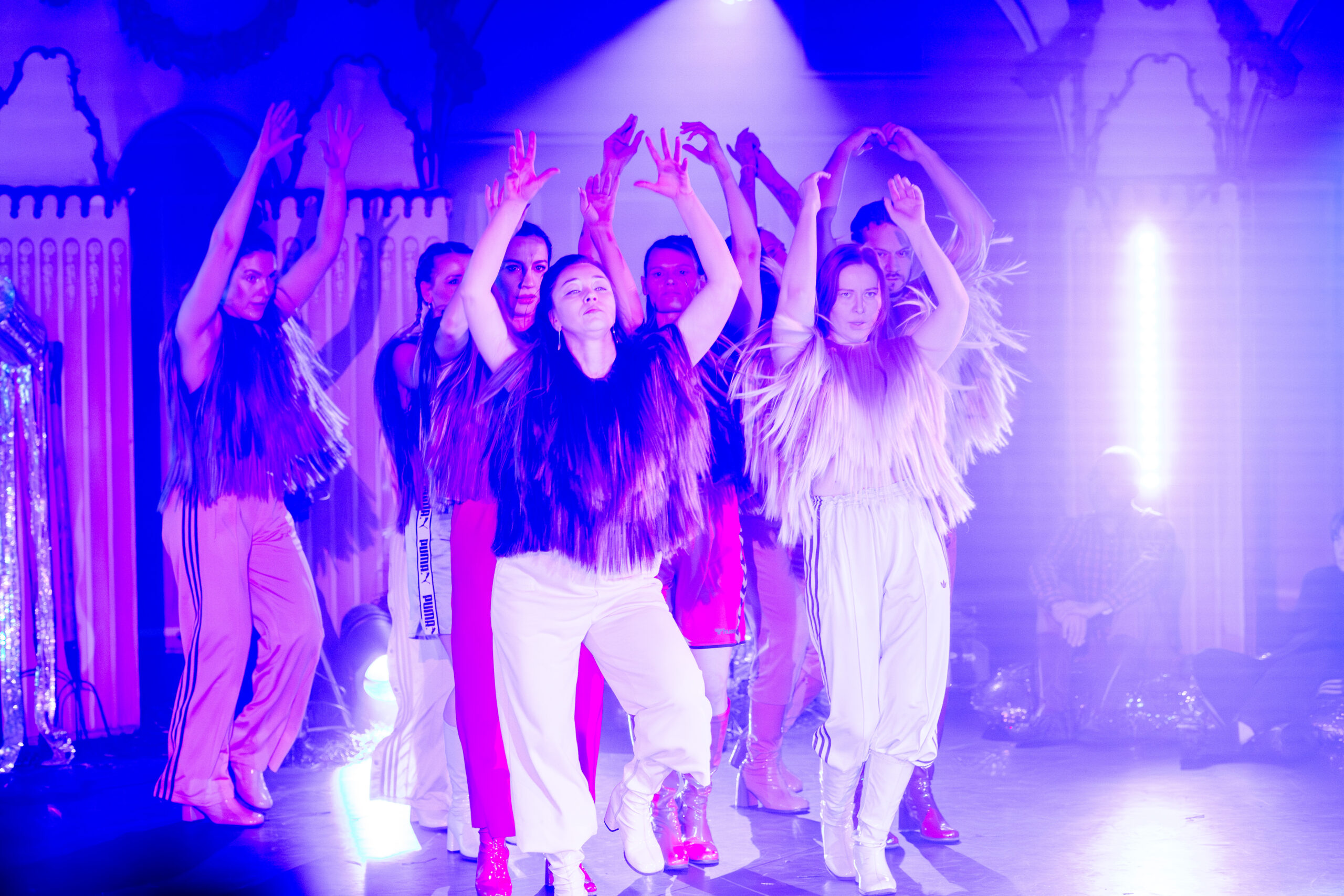
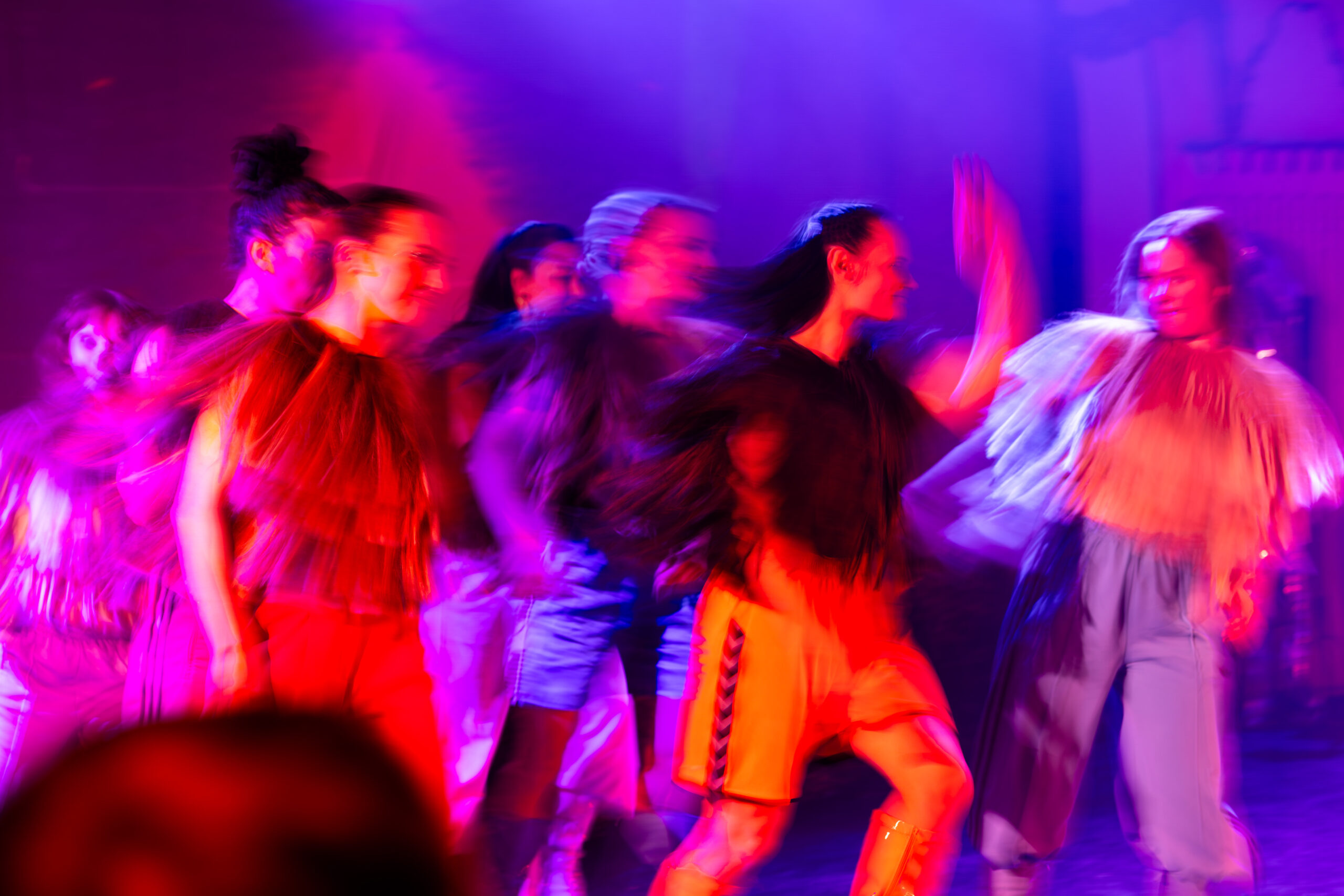
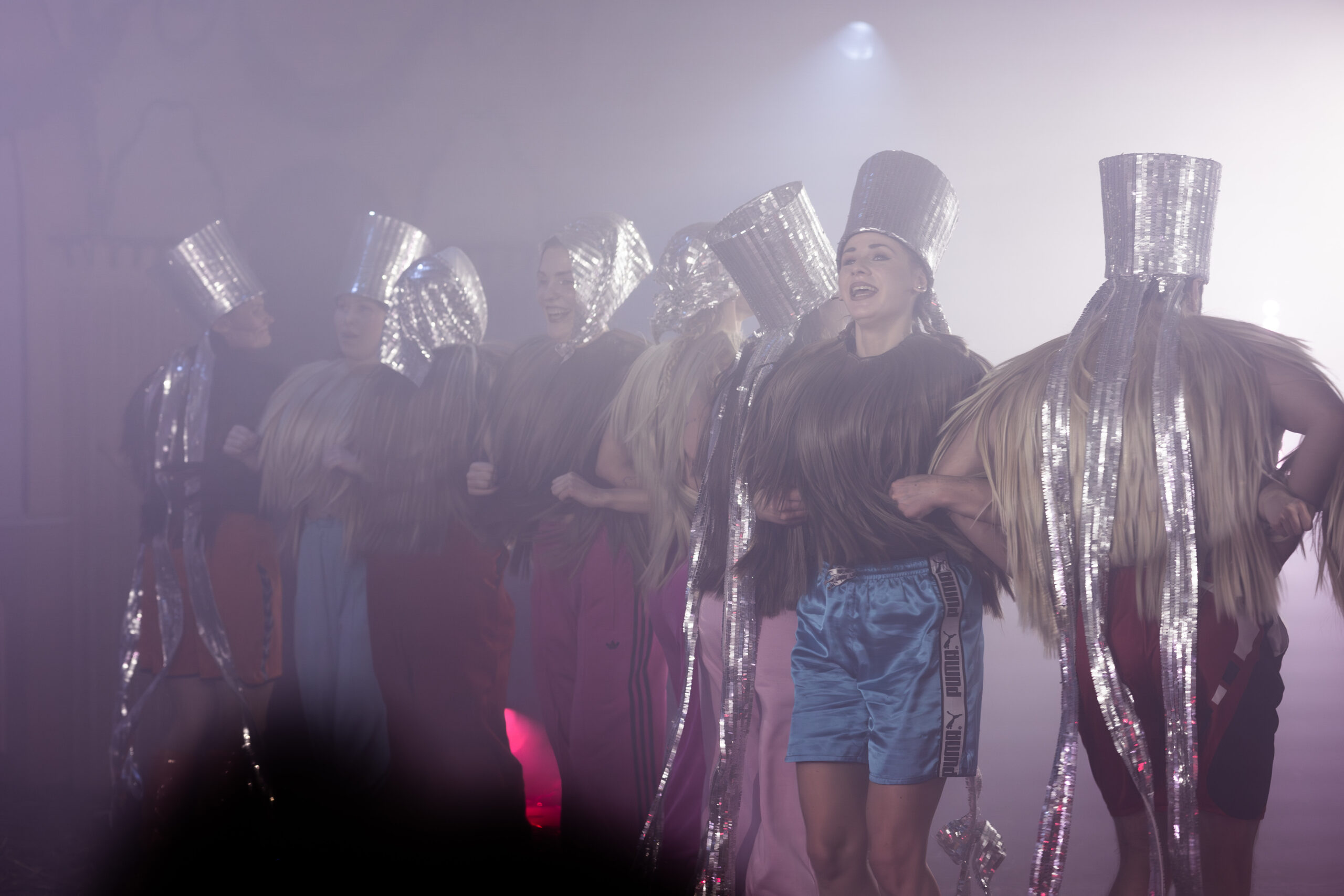
If Grigorjeva’s work is political, her politics is about intimacy, so if conservatives find her as a person and her work provocative, they find intimacy provocative. The right-wing discourses take issue with what she does because the intimacy it captures transcends romantic plots between heterosexual couples and the nuclear families as products of these plots. Her work offers a radical appreciation of all that is alive, and this love for and intimacy with life is also at the heart of her creative practice in poetry, criticism and performance art. Her output, then, is provocative in that it promotes tenderness, intimacy and love in multiple forms, and these appear as resistance to violent systems that wreak havoc on the most vulnerable lives. Love in her art appears as friendship, love for nature, for places, food and travel. It appears between and within bodies that are not beautiful or able in conventional ways. Sütitajad (Igniters), her dance-play, encourages audiences to embrace their own bodies in whatever form, and to create intimacies with other bodies – for example, between a human being watering their plant to nurture it while learning something from the plant’s stillness. The dance-play leaves one humming Prince’s ‘Purple Rain’ and makes one want to hug and hold one’s colleagues, neighbours, parents, friends, pets, trees or partner. In a similar way, but through poetic language, her latest poetry collection, Frankenstein, makes one think of the softness and fragility of living bodies, human and otherwise. And Clitoris Is an Anarchist, her latest anthology of reviews, essays and interviews, leaves one critically contemplating the often violent structures in which many bodies are forced to live.
Although Grigorjeva doesn’t like the public persona of Taylor Swift, the billionaire feminist pop star (she does say she feels a certain intimacy with Lana Del Rey, as we’ll see later on), I think her impact on Estonian society is somewhat similar to the international Swift Effect – as a ‘controversial’ young and traditionally beautiful woman who does not succumb to societal norms of settling down and having children by the age of thirty-five, some are infuriated and others inspired. Grigorjeva sets a liberating and powerful example for young women and queer people to live their lives in the way that makes them happy on their own terms, not on those of the state. In academic criticism, her poetry has been compared to Franny Choi, as both use poetics to subtly yet clearly point out the misogynistic and racist-colonial violence that women and minorities suffer.
I tend to think of good art as something that comes together as a whole, something that one can imagine holding in the palms of one’s hands. Grigorjeva’s work feels like that to me, and although I’d like to say that her work reflects her personality, I don’t think that’s right: rather, her art – academic, performing arts, literary – forms a kind of solar system in which she is neither the central star nor a planet fixed on a single orbit. As a person, she appears instead as a creative and critical observer, someone who both inhabits and crystallizes that system.
What languages do you think in, dream in and speak to yourself in?
(I’m asking because I know you speak several languages and have lived in Germany.)
I think in Estonian; I speak to myself in Estonian and English; I dream in dream-language. By dream-language I probably mean that the logic of dreaming, for me, departs from logos as such. Dream-language is non-linear, branching, plural, collaged – it’s a bit like performance art. More specifically, I don’t think I can even say whether I speak any human language in my dreams at all – whether it’s Estonian, Russian, German, English … dunno. That’s why I like to think that I dream in dream-language, but also in dream-dance, dream-music, dream-film, dream-handicraft, dream-video game, etc., etc.
What are your favourite words in the different languages you speak, and why? Does knowing many languages enrich your creative work? And what about language and dance, a wordless form of communication? Do you undertake your choreographic work in a specific language?
I think the word is body. I am especially fond of its equivalent in Russian: тело. I also really like the Estonian word öö (night). I find it a very precise match for what it refers to.
Dance in today’s world has long since ceased to mean wordlessness as such. Ever since the 1960s, choreography has made extensive use of words, sound, video and movement. More broadly, choreography can be understood not only as the organization of movement but also as the curation of space, words and bodies in time; it is by no means merely a so-called body-specific medium.
I think that knowing different languages also materializes differently in the body and that the internal logic of dance itself (even when it uses words) is often quite different from, say, text and the act of writing. A word in dance, for example, is something other than a word in a written text.
As a creator, I certainly have a kind of handwriting or signature – both in literature and in theatre – but it seems to me that different media allow this handwriting to express and manifest itself in different ways. In that sense, I feel that every creator could be multidisciplinary: different media undoubtedly nourish one another, whether indirectly or directly.
How exactly do they do this? One could say that thinking from the body, thinking in the body, bodily thinking, has definitely made me write differently (and read differently, too). In Frankenstein, for instance, there are texts that I would describe as bodily texts: anatomical-erotic prose poems that also differ formally from my earlier work in previous collections. So dance has certainly influenced the creation of my texts – and vice versa.
You work within different genres. What does this entail? How does dance influence writing, how does writing influence dance; how does criticism influence fiction, how does fiction influence criticism? Or is co-creation rather than influence a better word?
As a critic, I am in some sense closer to my ‘real self’. In my fiction writing, the voice that says ‘I am Sveta Grigorjeva’ feels more like a role to me; I allow it to be less filtered. As a critic, I often impose more filters on myself, because as a reviewer I encounter a particular work and, through it, inevitably its author as well. It seems to me that as a constructive critic I have to take into account the fact that a review can also say something to that author – that is, I am in dialogue with both the work and the author (as well as with the readers of the work).
As a poet, however, I almost never think about the reader. I am in dialogue with myself. For me, all art is, first and foremost, a way of practising how to inhabit a particular world and a particular mode of being within it. I am interested in how poetry (and dance) can be used to practise a stranger, more wondrous, more uncanny, more magical way of existing in the world. In other words, with every creative act I try to knock something in myself slightly out of alignment.
This, in turn, affects all my other pursuits as well: writing criticism, encountering other people’s art, as well as dreaming, loving, reading and so on.
Frankenstein by Mary Shelley has probably had an effect on your eponymous poetry collection. Would you like to expand on contemporary monsters and their creators? What does the word monster mean for you? How do you think monsters are created?
Mary Shelley’s Frankenstein has certainly influenced my poetry collection and the choice of its title. There is an interesting story behind Frankie in that sense. Initially, the collection was titled Decolonial Carnation. I wanted to write about power, heritage, the future, traumas of the past, technology, the choices of the creator and ethics, but over time Frankenstein began to take over, devouring the original title and the conceptual idea of the collection poem by poem, transforming it into something else – something more powerful, more empowering, at once softer and yet perhaps also more terrifying. It seems to me that in the collection I conceptualize the idea of the monster as something other than, for instance, an aesthetically ugly creature. Monstrosity is a phenomenon that fascinates me, as do horror films, splatter and slasher genres, multiplicity of bodies, over-the-top humour, grotesqueness, excess – all of which I also consider essential components of monstrosity. Monsters come into being through our failure to understand them, when we cannot comprehend them, cannot relate to a particular way of being in the world. The monster is like the capital-O Other on to whom we can project our fears, abjection, paranoia.
But Frankenstein’s monster is, in the end, Frankenstein’s creation – or creations; it bears his face. It is, in fact, his body. The body, or bodies, of this world and their embodiment. In a sense, it forces us to look ourselves in the face. The one we call ‘ugly’ or a ‘monster’ is therefore ourselves. What interests me, however, is how monsters are created – who decides what counts as the standard and what does not fit within it, what we push to the margins, often out of sight, and why. Personally, I find the liminal world far more interesting.
You title your work very well – the titles kind of hit the reader; there’s something powerful and slightly threatening and provocative in them, at least for me (Who Is Afraid of Sveta Grigorjeva; A Clitoris Is an Anarchist; Frankenstein). And yet, when I read your work, I think of intimacy in all its forms. Can you say something about what intimacy means to you? How do you think the contemporary world practises intimacy?
For me, intimacy certainly does not primarily mean sex. Sex can also be a non-intimate activity or experience. But it’s an interesting question: what is intimacy? I think it’s something like a particular kind of closeness that often doesn’t even need words, something that is felt through other senses – that moment when you know it’s here, this intimacy.
It can manifest when someone sends you a video with the message that it reminded them of you. It can be the way a friend brings you back a small keepsake from a trip; the way a work of art crawls under your skin because you yourself have taken a step towards it, because you were willing to allow something get under your skin. It can be a cat bite, talking to plants, consensual infliction of pain within BDSM practice, reading and writing poems, making shit jokes, sharing ultra-dark humour in a friends’ group chat …
I think intimacy is something akin to Karen Barad’s concept of intra-action: something that does not exist until two or more phenomena meet and become something new. As for how the world practises intimacy – well, I’m afraid that genuine intimacy, that close-close way of being with others, is becoming increasingly rare. I think, for example, that fascism is the opposite of intimacy.
In Frankenstein you offer alternatives to many mainstream forms of intimacy and living and loving. Can you name some of these alternatives and tell us why imagining them in poetic form was and is important for you?
I believe that love is not something that is primarily found in romantic relationships between couples; love can be found and cultivated everywhere and with everyone – and everything. Loving does not have to be narrowly delegated to, for example, the nuclear family or monogamous relationships. And yet we are oriented in that direction from a very early age. There can be a great deal of love in my life, but it is certainly not dependent on whether I have a partner or not. The heteronormative world with its assumptions feels relatively foreign to me, and I also think that for many people the nuclear family is not actually a natural way of loving.
For example, being alone suits me. But that does not mean that I am alone in the world or unloved. Quite the opposite. At the moment I live with my two cats, my books and my plants – a proper witchy set-up! In the Middle Ages I would probably already be on the bonfire. A beautiful woman, doesn’t want children, doesn’t want a man either, tries to cultivate a magical way of being in the world, talks to plants and cats – come on, to the stake! And yet my world is full of love, perhaps even more so than in some relationships between couples.
To me, stretching love and intimacy beyond the kind of restrictive frameworks they tend to take today feels like a move towards a healthier society. It’s a must. I also think that incels, for instance, emerge precisely because of rigid heteronormativity: narrow ideas of what is sexy, who is worthy of love, a toxic relationship with oneself and with others, treating the other as property – we must start somehow to dismantle this kind of one-dimensional thinking. As a creator, I find it deeply compelling to think about how we love or how we might even begin to imagine loving differently.
Again, I don’t want to say that monogamy is bad – I am monogamous myself – but I do believe that it is certainly not the only viable way of loving, and that it, too, needs to be constantly rethought, both as a concept and as a practice.
Can you name some inspirations from abroad that you yourself find relevant to your creative and political agenda?
Quite a few of my texts have been written while listening to Lana Del Rey. I find her persona far more captivating and contradictory than Taylor Swift, and her melancholy is something I understand very well. When we were talking earlier about intimacy, this is where it comes in: with Del Rey, I feel I am intimate in a way. The manner in which I allow this artist’s work to approach me is almost erotic – perhaps even a spiritual experience.
When it comes to writers, I deeply love Cookie Mueller, who became known through John Waters’s trash films but did many other things as well: she was a dealer, a go-go dancer, a socialite and a writer. Her short stories have been enormously inspiring to me. From Mueller I’ve learned how to find joy in a world that is simultaneously horrific and unbearable – how to cultivate humour and joy as forms of resistance.
I’m also strongly influenced by difference feminists, especially Luce Irigaray, whose concept of the flower-woman has certainly shaped my thinking, as has plant-thinking more broadly: rhizomatic structures, plural branching, the unfinishedness of individuation. I also deeply admire a poet and writer like Jackie Wang, whose works include Carceral Capitalism and the much-reread Alien Daughters Walk into the Sun, which brings together her essays and reflections on womanhood, power, queerness, punk and more.
Critics and literary scholars (and you yourself, I think, too?) often use words such as bodies, emotions and rebellion to characterize your work. What are the emotions you think contemporary bodies – often overworked, underpaid and living precariously under capitalist, colonial and patriarchal systems – should experience more?
I think excitement, joy and satisfaction. Capitalism never allows us to feel pleasure – neither in work, nor in our bodies, nor in relationships. Nothing is really allowed to bring joy or fulfilment. We are constantly expected to be anxious, stressed and oriented towards the future, so that somewhere down the line – months, years, decades from now – we might finally feel good. But, in fact, we should forcefully allow ourselves to be – already now – joyful.
To find joy in small things: rereading the works of favourite writers; walking through a city blossoming into spring or through an autumn landscape thick with fog; exchanging cat pictures with your parents in messages and communicating in a strange emoji language; smiling at a stranger without wanting anything more from them except the simple transmission of a shared feeling of joyful being-in-the-world.
I think bodies living under the yoke of capitalism can enact resistance precisely by allowing themselves – sometimes even against their own will – to feel good for a moment during the day, until this accumulates into something larger: a greater good. To feel satisfaction in the knowledge that we are already enough, that our bodies are enough, our work is enough – we are enough.