
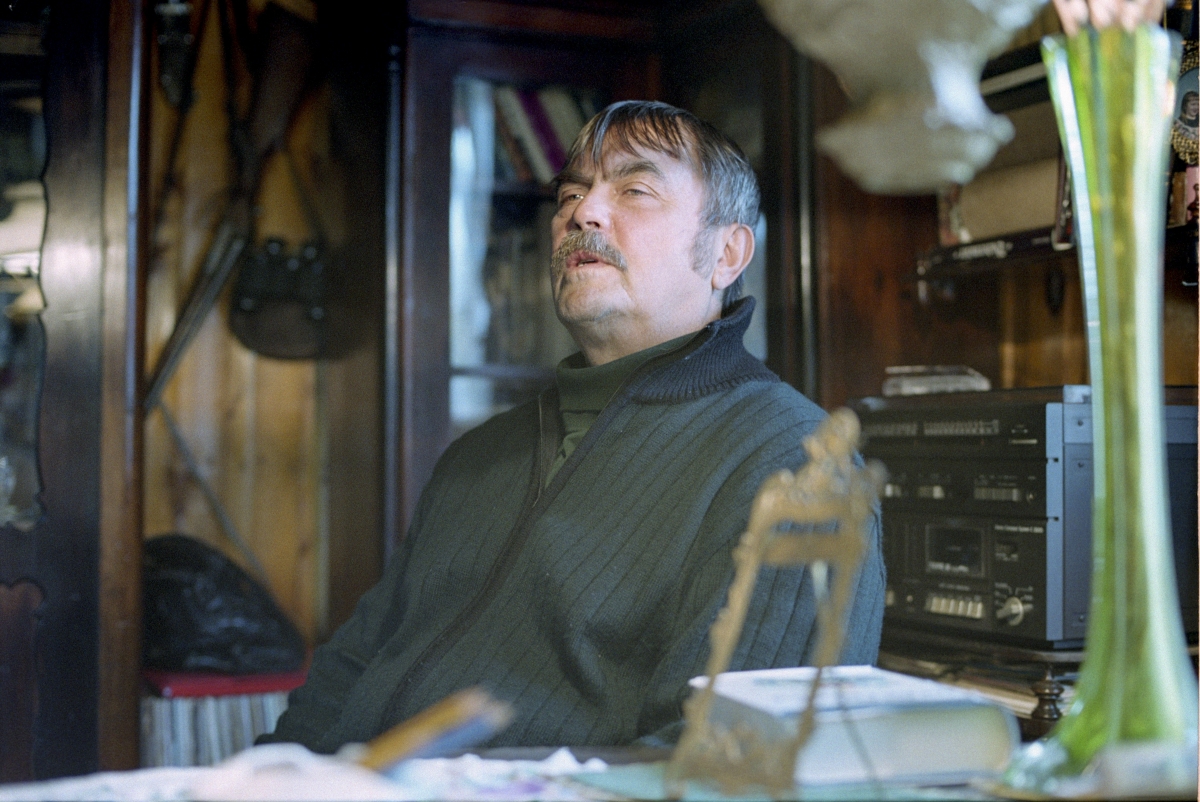
STAGE ONE
Here, the river bends sharply to the northeast. I stop the dog sledge at the end of the trail, directly between the rocky outcrops that line the shore, and let the dogs rest. I rest myself, shifting from my stiff riding position on to my side. I take a piece of larch resin from the pouch, put it in my mouth and chew pensively, eyes – sprightly green insects – on the winter-white horizon …
This isn’t where I was born. That happened somewhere else but not so very long ago. I was already a grown man when I first came here, full of energy, ready for action with an unspoiled youthful spirit. I loved this congenial corner of the world, its primeval forests and raging rivers, the endless reserves of forests and wilderness. The people, whose nature and customs were just as splendidly simple and beautiful as that of their creator. An Arctic landscape. Rich in poverty, a generosity of spirit, content with their being – this is how I saw them. I felt at home among them as if I were one of them, having only left to be born in another place. As a bearded man wandering the trails and paths of the frozen wilderness, I could see my cradle swinging forever in the treetops of this boreal forest. Of course, I became a hunter and a forager, reindeer herder and fisherman. Otherwise I would have been visible to the bad spirits. All this had been going on for quite a long time, a quarter of my life. The seasons changed with dignity, like tired herders tending a flock. My paths through the forest and to the hearts of friends were well trodden. Nature was nature, people were people, I was myself, no one was someone else. Nothing happened outside of this circle.
Consequently, this is what I would like to reflect upon – who turned out to be someone else; what was it that happened, if nothing happened …
My name is Niika. Apparently I’m a Nganassaan. At least that’s what they say, what they have said since the beginning. The actual land of my birth was on the shores of an Arctic sea, an icy stretch of land which, like the white fang of a ringed seal, cut through the surface of the sea. What they meant was a peninsula. There, said their sage, stood my good mother’s chum. When I was still knee-high to a grasshopper, apparently my good father had taken me night fishing at the mouth of the Great River. A burning torch had been rammed on to a frame dug into the riverbed. Father was holding a bow with a blunt-tipped fishing arrow. He was about to shoot a taimen dozing on a wave just as it was covered by another wave. The arrow bounced off the fish. What had come from Father’s eye came back to Father’s eye, blinding him. In retaliation, the taimen snatched me from the rocky ledge, just as a reindeer snatches a mosquito with its tongue, and swam away with me, further and further. The fish feared my father’s remaining eye. The taimen swam against the current towards the heartland until it was lulled to sleep again by the protective cloak of the forest that grew along the banks of the river. Some local people, indigenous to these forests, happened to be night fishing at that very spot. They speared the fish, gutted it and, upon seeing me, they exclaimed, ‘Look, a Nganassaan!’ The barbed hook of the spear had gone through the back of my right hand, hence the scar.
As I had been reborn from a fish, the taimen was considered my totem. It was said that the blood flowing through my veins was untroubled and that I was a good swimmer. My fate and my origin have been confirmed. It all added up – the wide, painful scar on the back of my hand was particularly convincing – but still I had my doubts. Why Nganassaan? Why not Lamut or Sami? They shook their heads and said that then I wouldn’t be a Nganassaan. I tried to explain to them that I was too tall to be a Nganassaan. ‘Yes, that’s true,’ they agreed. ‘Tall Nganassaan is more accurate.’
Then severe winter gripped the forest and life became serious once more. Years later, on a trek through the frozen desert, I happened upon a broad-backed man with high cheekbones, a true Nganassaan. Translating from his own language, he explained to me that ‘Nganassaan’ means ‘human being’.
Then I said, ‘Is it possible for someone to be human again, for a second time?’
‘Not even once is it possible,’ he answered. ‘But one must keep trying.’
So, they had been calling me human all along. Without malice. Because so many were called by this same name, I was given the nickname Niika-Nganassaan. Grudgingly, with a slight feeling of self-deception, I ultimately came to terms with my name. One should not reject that which comes from the heart of a friend or through some mysterious twist of fate.
My life continued to flourish, although for some time I was in awe of the boreal forest – not unusual when an ordinary person finds themselves in an extraordinary place. Just like an organ practises its player, so the forest was practising me. I began to worship trees. Before I had been taught that there is no such thing, I was taught to disbelieve, which in the end leads to a firm conviction. Ever since, I feel more intimately connected to my faith than to the blood coursing through my veins. If the blood were to stop, I would cease to exist – but without faith as my guardian, I never even existed. Trees became my spiritual guides. They meant this – stand on your own two feet, listen to the song of the whirring saw as it draws closer and continue to rustle even without reward. It’s not belonging to this realm that I honour – it’s faith. Hope and love, those naive notions of consolation, should also be mentioned. My hope was a bottomless fish well into which I’d never put a single fish – in fact, it was completely empty, but I still hoped I would find something in it. This consoled me in times of hunger and misery. Love, for the native people of the boreal forest, and therefore for me, was a good pair of skis or a fine-bladed knife. This love stood neither higher nor lower than a man and a woman, it stood outside of them. Non-existent and pure, it stalked me. Only later did I love a woman, that beautiful and uncertain living world, who doesn’t know what she wants, and, if she knows, then she doesn’t want it.
I could love just a body, like Katt, from the guest house in the river village. Or I could love just a spirit – Ijá. Once, on a forest trek, I spent the night in a reindeer herder’s chum. Telgá, the wife of the herder Kotún, gave me a green silk pillow and said, ‘Spirits of the dead live in silk pillow.’
‘I am not afraid,’ I replied.
‘Here live Ijá’s spirit.’
‘Who was Ijá?’
‘My daughter. She die young.’
‘I-já,’ I repeated.
‘She was beautiful. She smelled good.’
‘She is happy here.’ I caressed the pillow.
‘You sleep on her. Ijá beautiful in you.’
Telgá pulled her fur vest tight around her chest and, bowing her head, left the chum, trusting me beyond any doubt. I lay my tall, tired body down on to the mat in front of the fire, the spot set aside for guests, and, with my head on the pillow that smelled of fish oil and ledum smoke, I fell fast asleep.
I awoke in the morning to the sound of the fire crackling with freshly added larch twigs. Motionless, Telgá stood at the head of my bed, possessed by a singular question.
‘You good sleep?’
‘I’ve never slept better!’ I stretched myself awake.
‘Was Ijá in you beautiful?’
‘Ijá was beautiful in me,’ I replied, ‘and she smelled wonderful,’ I remembered to add.
That’s the way it was. I had spirits to compare her with, luckily, and I didn’t make a mistake.
Young and invincible as I was at that time, I knew nothing except that with the guidance of faith, hope and love, anyone who wasn’t one already could become a human being, that is, a Nganassaan. However, with instincts deepened by life in the boreal forest, I knew that I would lose at least two of them. But that wouldn’t happen for some time.
First, I settled into my new home. Star by star I began to understand the night sky, and valley by valley the lay of the land. By the lines on their faces I began to recognize the indigenous people of the frozen wastes and the foreigners living in the river villages. I learned about the flora and fauna of the northland – the fish, the birds, fur-bearing animals, reindeer …
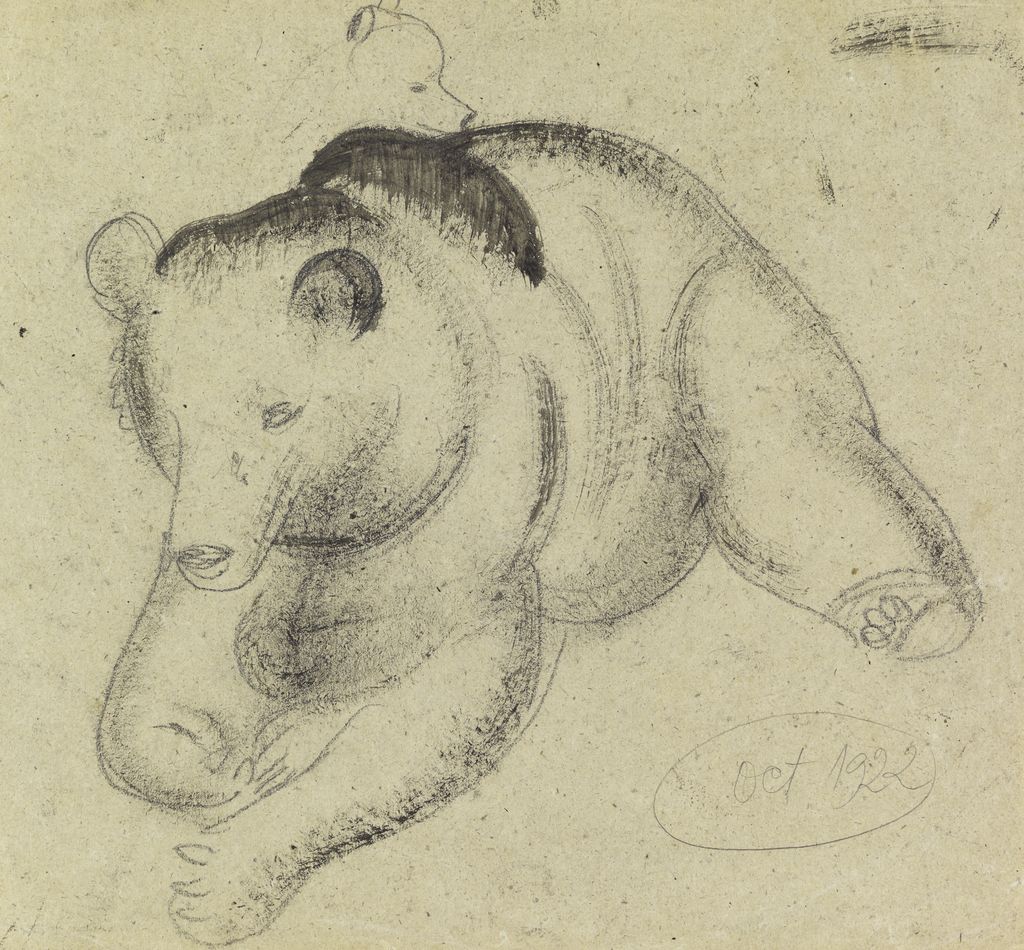
I soon learned that a dog that is soft to pet and would rather wag its tail than bite is not yet a good dog. A good dog is one that bites everybody, eats well and sleeps a lot – the rest of the time it tracks fur animals or pulls a sledge.
But one doesn’t get wise right away. It can take a long time for stupidity to mature into knowledge. Instead of good hunting laikas and sledge dogs, I purchased an entire team of lazy but good-natured dogs from strangers in the nearby villages. Some more than once, as sometimes a dog would run off. They would be brought back and sold to me again, although, out of human compassion, at a discount. Eventually, when I had run out of money, dogs were simply given to me until all the yards and hunters’ huts were depleted of the lazy, four-legged flea breeders. The fleas would hop on to me as I petted the dogs while trying to memorize their names. I told the last dog trader that his mutt was nothing but a fleabag. The man became enraged and took the dog away. This was the only time I made a fair deal with a dog trader. That time. Later I acquired proper sledge dogs, because, as the local gelders always said, a hunter without a good laika is just a drifter. I was given, absolutely free, a black, tailless laika, who had worked in a harness, by a gold panner who was returning to town with heavy pockets. Once, a group of starovery Old Believers took all the money I had earned as a summer raftsman for two sledge dogs, despite it being the Lenten period.
When I arrived on a log raft at the port on the mouth of the Great River, I became acquainted with a skipper from Norway and one from Japan. Back home, both were sport hunters and kept dogs. The following summer the Norwegian skipper brought me a full-grown Norwegian elkhound with a thick, double coat.
‘Veri guud laika!’ he said, as he handed the dog, ears pinned close to its head, over to me on the deck of the ship.
‘Veri guud seibel!’ I said and handed him fur pelts in exchange.
Conversing with the Japanese skipper was easier, as he could speak a bit of the local language. First, we became friends. We sat side by side on the quay on top of mooring posts. The Arctic Ocean raged behind us, wetting our backs from time to time with a sharp, icy spray. The Japanese man knew how to speak and how to listen. When doing so, he didn’t look at my face or into my eyes, rather he looked down or somewhere over my shoulder. The backs of the eyes are a sacred place for the Japanese, and to look directly into someone’s eyes dishonours this sanctum. The purity of this man’s communication was comparable to the Evenks, and his deceptive shyness did not shadow his dignity. Through this little skipper, I began to feel a spiritual closeness to the Japanese people. At our feet, in a rubberized sack, two little Akita pups slept snuggled together.
‘Why a gum-rubber sack?’ I enquired.
‘Gummi?’ The skipper looked down awkwardly. ‘Magnetism on the ship, the pups are afraid … They tremble, cry.’
‘Are you giving both of them to me?’ I asked.
The skipper nodded. I reached under my coat for my barter. His eyes twitched and opened. Just for a moment I saw that the Japanese do indeed have eyes. Then he closed them, and once again it was just a rumour. Keen and excited, he ran his hand across the sable pelts draped over his knees, sorted them into pairs by colour and lifted them breathlessly up to his neck. I could tell that he was already seeing them as a sable shawl around his tiny wife.
‘Take them, they are for you!’ I told him. The sea showered my back with a fine mist. I picked up the sack of puppies and rose to leave. The Japanese skipper remained seated silently shaking his head.
‘A gift for your wife,’ I said. ‘Otherwise she will have magnetism. She will tremble and cry,’ I added, attempting to win over his stubbornness with a joke.
‘I have no …’ replied the skipper, suddenly rising from the mooring post, ‘wife.’ With hands as dark as cast iron, he carefully folded the sable pelts and placed them on the mooring post. He bowed deeply and walked away hurriedly towards the gangway. As I watched him go, I suddenly realized that my words had unintentionally touched a tender nerve.
The akitas, those little Japanese laika pups, grew big. This breed, with its large paws, was unknown in the deeps of the boreal forest. A massive head adorned with a black muzzle and powerful jaws made them fearsome; but their outwardly gentle demeanour, broad chest and thick double coat, which was enticing to stroke, lowered one’s guard.
‘The master doesn’t bite anyone, but the dogs bite everyone,’ say the laws of nature, and nature is always right, which meant that my dogs and I were not a good match. Due to my high regard for the Japanese people, I kept the akitas for a few years as sledge dogs. They were noisy and dominant in the harness but were also demanding of themselves. There was something about them not typical of the canine world, an independence and aloof irrationality, just like their breeders in the human world. Thanks to some good luck and with the wordless help of a friend, I disbanded the quarrelsome team and finally acquired some dogs whose offspring serve me to this day. They are without exception Evenki laikas. Long-legged, broad-chested, sociable with a cheerful temperament, straight-out comrades who never sully their master’s name whether in the harness or on a hunt.
By this time, I was a legal, licensed hunter. Yet in my calling I was someone else, someone whose mission and purpose I could never grasp or define. To this day, all that I know about him is his odd nickname, Nganassaan. His destiny, which is the fortitude of a person’s character over time and action, was much different from mine. But more on that later.
Translated by Tiina Otema
ABOUT THE AUTHOR
Nikolai Baturin (1936–2019) was a novelist, playwright and poet. He took part in geological expeditions and spent many years as a hunter in the Siberian taiga, a region that became one of the great imaginative landscapes of his prose. Karu süda (The Heart of the Bear, 1989) remains one of his core works.