
The Mouth
The thought of life is vile, torpid, immeasurably stupid. To think of the perpetuation of human life. Fucking wretched! Without knowing why – you live! You don’t know? You little idiot – that’s your life!
After all this you still want to gaze on those ugly, despicable faces, to look on and on, you want to, you want to hold your life in scorn, hold yourself in disdain, despise the human race. You’ll go on doing it, infected by the will to live, tomorrow and the day after, longer even – live on and on. And you won’t destroy yourself … you won’t bring your hands around the throat of this madness … this insanity which in your most honest moments forces you to live?
You wouldn’t have the strength … and crying out can’t nullify that dumb will within you, will not. Through the long duration of your perpetual ineptitude, one and only sure instant, the one and only truly healthy thought in your sick skull … and you’d lose this inexcusable ignorance which thrust you into time … oh, I know: submerged as you are in weakness of spirit, if you so liked you could gasp out at the surface of the pool where the seconds of your thoughts vanish … you could breathe in … if only you wanted to!
Oh, just a whiff, the smallest glimpse of thought – how momentous that would be for a human being, for dying. If death was not – bliss. But now?
Moan and cry all you want. If it so pleases you, look here, at these tedious faces, stare deep into these blind wounds – don’t you understand, there’s no soul left here. They would not gaze so blankly if the soul was intact, they would not look so luxuriously numb and extraordinarily bored at your monstrous face. They wouldn’t have the courage.
Listen up! Pay attention to this pointless nonsense for a few more minutes, mark these words, every one of them – watch – how your face plunges in shame, how reason gores you on the first jest. That tiny grain, that little crumb of god’s name – look, it’s not there.
If your friend isn’t insane, then watch how they’ll calmly catch your throat. For a time, the company of beasts came to life: animals among their own kind. Here, you might resign yourself to a remedy, like the long cure of scorn. Or hatred? Aha! A joke!
You would be better off these days to agonize over it, more intelligent to worry, though even this strangles you. Nor could gnashing your teeth, gorging yourself to feel a pleasure worthy the superiority of humankind. But what does this pleasure even do – but suckle a person?
In itself, the world’s not so important. A solid argument could still, at any moment, bring down the heavens. Even nowadays – and so life carries on mortality more here than there, differently now than it was then, and so you make one small physical movement, a deft jump … your soul’s saved. So you see! Oh, what fun, how nice. How important. To die off famously – and fashionably? Well! … well ….
Idiot! Decide already! You’re like a child, like an old lady – a coward. So don’t go that way, little man! Deed, thought, deed, the right thought is precious. You don’t know? That’s right, yes, you don’t know.
The earlier, the better … let’s say in youth – it’s well-known how important this is … not a rib bone, or a scythe … something other than a symbol.
Anyways symbols are old forms, taken out of fairy tales … nonsense! I’m talking of something new, how possible it is, to not carry on with life … how possible it is, to get past weakness – such as birth.
To correct your mother and father’s mistake … to reconcile their sin of weakness. To reconcile with your ignorance – with death …
You must consecrate the insanity of living on … extinguish the foolishness amassed by life on green earth, the will to live and the desire within you, and to your purpose you’ll fall prey soon enough, descend into idiocy … sweet as an atom: neither hateful, nor hated – without needing to gaze at those hideous faces…
Translated by Ian Gwin
At the Mountain of Souls
War, plague, and drought have become mere fairy tales. Young people no longer believe in them, the elderly are in doubt. No one knows bombs or barricades. The factory whistle doesn’t call to work; doesn’t call to lunch. They say people once divided their labor, that they had a two hour work day, that once upon a time – like they say in fairy tales – there was an eight hour work day. That’s unheard of now – laughable, that primitive past, the children of those days. Everyone measures up as human now, with human reason, feelings, morals and a soul, the intelligence of virtue. There had been nothing like this before – so the fairy tale goes. It’s heaven.
Through the trees of paradise they saunter, alone or in clusters, people taller than high trees: there’s no more hunger … that’s all that needs to be said! All those frightening images of love, hope and human happiness have disappeared. Dreams like that come up only when life is suffering, when humane feelings are still no more. Though now people have grown up with their emotions, and to what effect. Reason no longer endures the random assembly of atoms. Besides their heads, people reason with their arms and legs now, with their whole body. They no longer have jobs, those savage games which were nothing but the depravity of humankind, when one person’s movements were dictated by the rhythm of another’s. It passed long ago, that vicious dwelling, that dumb discovery and dry rot of nature’s powers.
There’s no more work, and no one’s hungry, for hunger was born with work, as the fairy tale can tell. All that could be told about eating and drinking, laughter and tears, was forgotten. There are no mothers any longer, no fathers – all are people. No children either. There was once a time of mothers and fathers, when gods played tricks on humankind, deluding and enlightening as they pleased, forcing them to love and to hate.
Books in their stacks have gone away, there’s no reading or writing. That would only pull open a poverty of spirit shut up for generations. Not a thing to learn, and nothing to teach at all, everyone knows what they need in life themselves; in the art of living they’re far along. People have understood the gods with their deceit, and rid themselves of them: no bible, no catechism here. They’re remembered merely as the unfortunate bacilli of the inner life.
All is sun and air: father and mother, baptism, wedding, and death. The land is hunger, bounty, the heel of bread. Coats disappeared long ago, and shirts too—there’s nothing to be ashamed of. Since the injurious gods have been dispelled, lusts and longings are done away with, the source of all evils has gone away – the will, that foulest of self-deception, that power deluding all prejudice, when one dared to declare a mother and a father – long outmoded, according to the most recent knowledge. The will grants life and takes it away. Memory reads and writes, and like a hopeless disease and burden on the soul, knowledge has vanished as a mist, taking with it the designation of its time, what was once considered reason. All confessions were proven sick long ago, and who would be permitted to corrupt the inner worlds of others with their own.
The spark of life rules like a commander over its fairy-tale gods, too. A person (in the correct meaning of that word) is born of air and desire.
A crowd has gathered at foot of the mountain. They are like the young lads and ladies of ancient days, who took wives and cleaved to husbands, not gaining victory from their weakness. Everyone there is full of life; they are as they are meant to be.
Death is unknown, and so there’s no need for birth. Calendars aren’t kept, as there are no hours or days, or nights. No one converses with one another, for that would be a torment. Meditation is enough – in every case expression is an unforgivable weakness. No one has pity, depression. They’re incapable of crying, as laughter’s useless for following a train of thought.
Those people, the humans of the future, who live in a long present – in the correct sense of the word – they live. This is the first step in the present, though they can’t manage any further. They reside currently only under the mountain of souls. From morning until night, gathering all of humankind – if there could be such a measure for us – not weeping, as that would be weakness, but in remembrance. They’re singing there. The song has been lost, while not in its former, unconditioned state, since song is an art: all arts are yet to be. Here they sing freely.
As to why these young people for all people are young in the future – sing and rejoice like this, the fairy tale will tell, as other fairy tales have been completely forgotten, briefly, dimly the story of how the mountains of souls were born.
How the mountain of souls came to be, a place where there is no war, plague, or drought, goes something like this:
…………
…………
…………
13.04.1907
Translated by Ian Gwin
The Labours of Creation
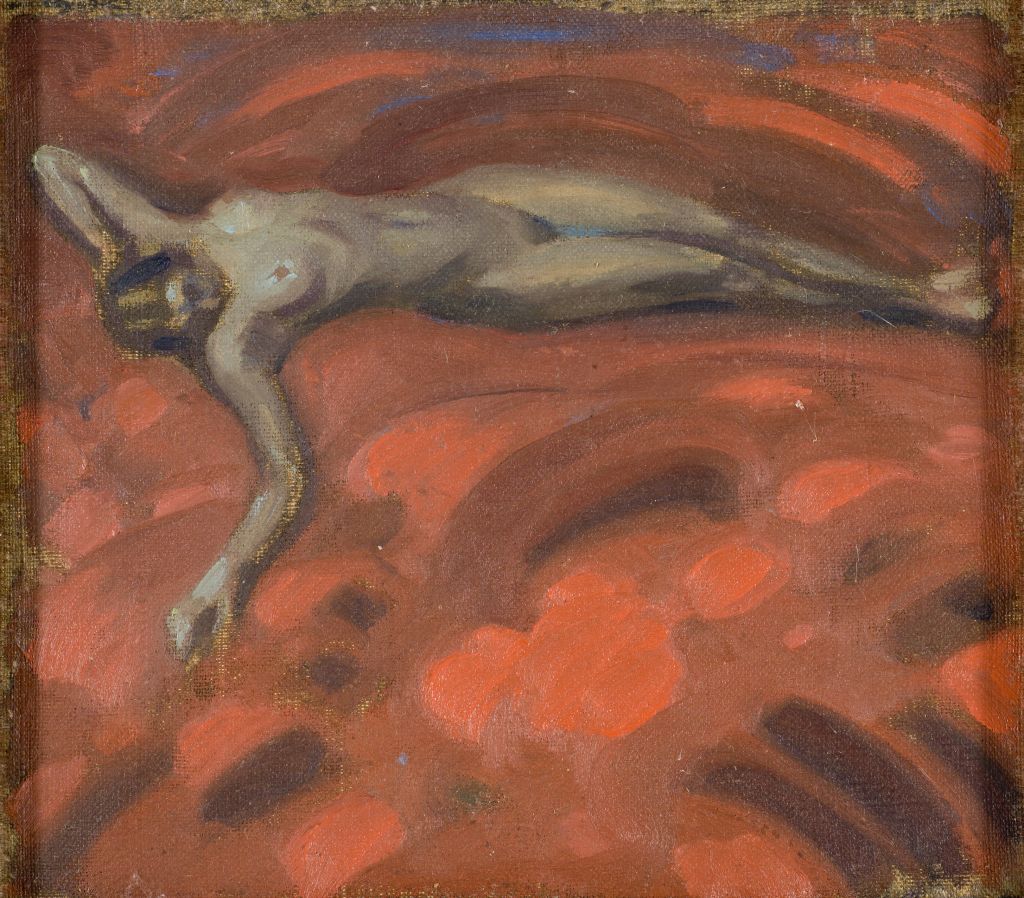
This excerpt from the prose poem Emased (Females, 1909) was first published in the Autumn 2025 print issue.
All of us – looking forward and back, those earnest ones who can’t look back, those who drift proud and defiant, namelessly, and those who must lend power to the gaze of another over the hunched back of someone lying low to the ground – they hover as the others, scrape against the skies, against a splat of air, pained by painful dark streaks. Like those who hurl themselves to the ground and hide behind empty sacks – all of them. Some look above, others ahead, into outstretched distances – all untrue. For above there are only the eyes of a beast – silent now, who knows why, it has slunk far off and no longer decorates the thirst-gaping nostril, stretched above the hoary beard, goading without essence.
And then those, too, who thrust through mouldering rot, their souls paralysed by lust, all so gazes might comprehend how, above the land, those exhausted from looking forward and back grow hungry for what lies within and without, yearning far beneath wells and further over the trees. One closer to heaven boils in the fever of the search, a cell melts away from its soul by accident, unaware. Ah, if only they yet knew the elementary laws, the sex-breed that has been called a soul! But at last imprints of some kind begin to appear – aside from worthless repetitions: two who face the north wind and two who gaze at the worn beard swaying, at the cowardly-suffering eyes of the reproachful expectant. By twos – worlds lust – two sexes breed. Your soul is mine, and all your stretching, twisting, and excessive convulsions – they are for a world after. That is, a world to come, baited breath’s manifest. Nothing other than two worlds without their cleaving: Male and Female. They are ancient yet unknown. That of body-flesh, what trembles, stretch-scars – that which has been named the living soul within all of us, even those who whistle without a trace in the lascivious night, who desire only to vanish alone, like clouds gone dry, serenely mocking homely over two creatures breeding.
And the ones pressing together in pairs, reproach up from below, those who craft a slight patch of melting fire on the dark wall of an alien soul – in their domination they drink for the struggle of everlasting-consuming life, to digest it. Even the heavy male stallion is ashamed of grieving his fatigue, and the other exhausted one knows this through the power of thought, even if she does not look back from politesse. Yet whoever fails to hear the birthing song of the knife here, who otherwise, soul full of misfortune, searches for fullness in breed-sex, they will desperately feel how all and all empty out – and finally the mysterious little aggregate gets lost within the barren, empty, essenceless room of its soul where there is neither colour nor light with shadow. When all has been washed away, shaken out, wrung dry, then you know how poof – brief life is – why it did reach its natural end by the length of the females’ beds, like a little, pure and winged nameless thing, first falling after love, sinks and yellows softly, oh so softly. Yet they are given names, cursed – shame won’t stop them – the shame of futility, of existing without reason or cause.
When it is finished – it was short, so very short the night. Like a fool who has only just regained reason, like someone who just awoke. Why did the soul of breed-sex, in its beastly, animal heaviness, not drown all else, all that is other, extraneous, pointless – until it was gone? Why must they, why must they look back forward, gaze back again, why have they not crushed amid one another the percolating, weirdly pricking soul. And yet still they want to leap up over the matted, worn-down scruff into green, to watch tarnished and polluted air, so they have whole legs and everything’s in its right place. Then wander alone, shamelessly, lugubrious while concealing an immeasurable world within yourself across horny meadows and beneath nasty trees rustling, and let the she-calf suckle long as time allows. Then turn, girlishly and in character with pain-awaiting side forward, and hear how that which is male violently thrusts, air-sucking suddenly lows plaintively. The surging power of lust impregnates the females with desires, dazed and foolish – then you seize the right instant to attack, take what is open, slick-skinned, and folded inward into the male. Feel how he wants, and feel how he craves – from his own pain’s rule. Penetrate him – or you go crazy from the will to annihilation and the frenzied beauty of desire. He crams himself into you, within you – or perishes, consuming himself under longing’s pressure, falling without forgiveness, thrashing in trembling thirst for the male. That is your breed-sex – and your soul’s punishment, and afterwards they too will wander cursed around the profane decay of those who long since died in sin.
That is the one who does not glimpse the sky from behind your shoulder’s concealment, who doesn’t see, who must blow steam from under the energetic force of the neck giving air for the thick-beaked birds’ feasts of hatching. It can’t, or doesn’t dare fill itself into you, but leans toward a proud coagulation. For the law is tremendous: women-folk – female by force – in coy sorrow for the thoughtless snapping of the final membrane. This is the whole song of life – everything and all – for the final victory. By force – all strength has its source here, fountain of fires, like one who politely looks back into herself and suddenly finds the thought to elevate beauty, to refine the spirit of the age, which compels a leap forward. This beast-thought within the endless eternal drive for life – for the heightening of animal-forces’ gorgeousness. And all of it to broaden beauty, make it heavier, grander, wider, deeper. A female, those nursing in the forest, until the murdered offspring of their sex-breed calls them once again for the soul’s exaltation, on the edge of the fields, proudly, unashamed in homeliness. If they look down and up, the weak supplicants feel ashamed for their build, while they fear the pressure of a fixed gaze darkened, then something futile fills the air, something miserably bullish, girlish-scorned, pitiful angel-divine. But as long as the breed-sex of the drifter functions for a soul – the living have nothing to do with the helpless-divine, or angel-futile. Here is the flesh-body – and it too may heavenly impregnate useless thoughts of life – for humans – for the Human – for the human is a sex-breed, and life is male or female, as are thoughts, which dance, conjugate, and breed one another. Good, then – the labours of creation …
And you are the creator – demiurge of gods and humans and hungry ghosts by that very same thought all of us looking forward and back, up and down – in place of a world even, made, in the slow, blind wandering of time. Whirl within that conception like a fury, like a meat-thirsty, claw-toothed, lascivious female beast, like a creature of the male – a grave danger to all of this little, fragile globe. Like the first deeply passionate touch, which flashes back with an all-encompassing spark of greeting – feverish, fecund thoughts stir my molten body-flesh – naked, splattering, and creaking infantile bodies – aborted before their time, their time – time …
Translated by Ian Gwin
ABOUT THE AUTHOR
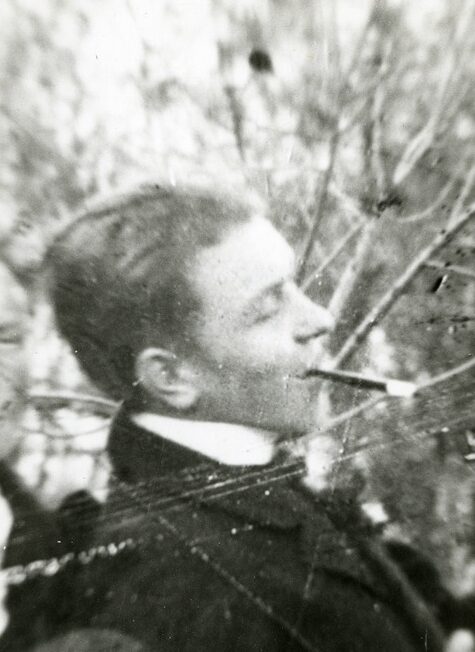
Jaan Oks (1884–1918) was one of the most obscure and eccentric authors of the Young Estonia movement, a poet with a difficult life whose image and emotional temperament were already compared to Arthur Rimbaud in his lifetime. His nightmarish prose poetry may, however, be more precisely likened to that of another famous nineteenth-century Frenchman, Comte de Lautréamont. Oks’ texts possess a deeply compulsive, impulsive quality, mapping the deepest layers of the subconscious.
One can also discern in them a strong psychedelic dimension, for they expand ordinary consciousness rather than constrict it. The dissolution of the self and the destruction of fixed identities lie at the heart of Oks’ poetic revolution. While on the surface his texts may contain traces of misogyny, their complex deeper layers reveal currents that are more hermaphroditic, perhaps even supra-human in their perceptual scope.