
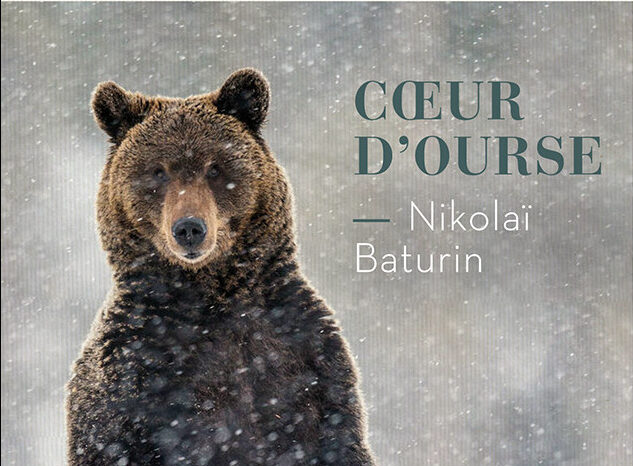
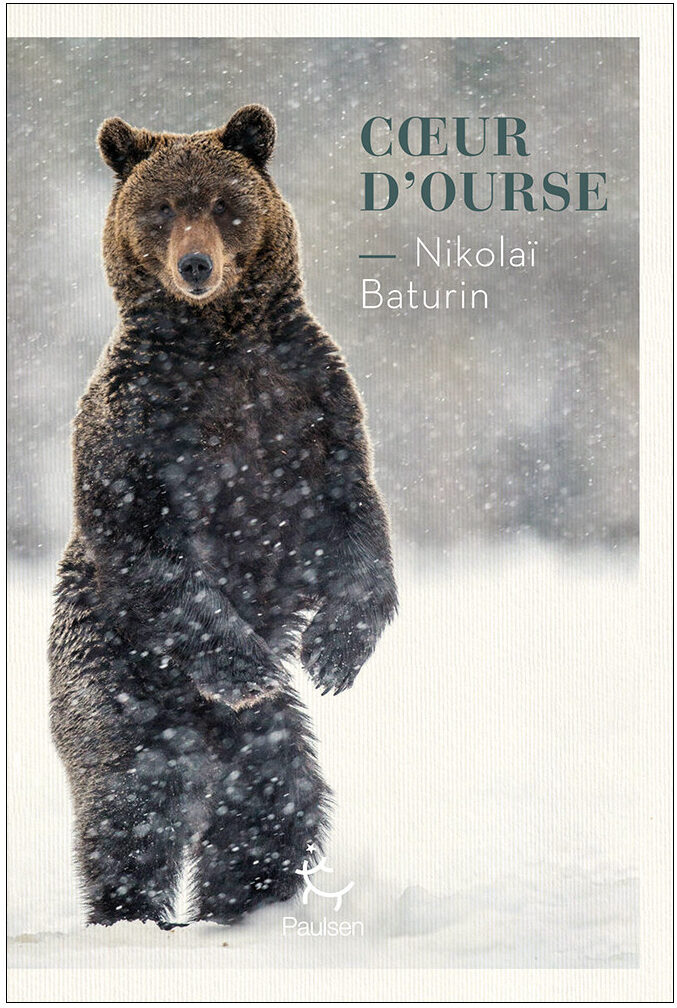
This powerful and spellbinding novel – carrying within it the sap of trees, the blood of game and the crash of breaking waters – can, according to its French translator, now be found only in second-hand bookshops in Estonia. A pity. For in reading this fabulous book, overflowing with energy and vast expanses, with wild nature and nomadic winters, with introspection and a quest for the self, one roams immense territories with delight.
First, the physical territory of the taiga, which can here be no mere backdrop, no simple setting, no local colour. It rises to the rank of central character, enveloping the narrative in its calls, its secrets, its enigmas and its resources. And just as surely as snow covers a track, it never ceases, through the seasons of hunting and the novel’s eleven stages, to be neither quite the same nor quite another.
Thus the taiga is both magnet and mistress to Niika-Nganassaan, the hero of this book. He becomes the enlightened psychopomp of Nikolai Baturin (1936–2019), the one who leads the reader into this immense forest labyrinth.
This world of freedom and snowy solitude partly constitutes the hunting grounds allotted to him by the local authorities. To travel through the taiga Niika trains sledge dogs and makes use of skis. For shelter he builds cabins, sometimes even with a sauna. To live and survive he gathers berries, sets nets in the rivers and lays trap lines. The taiga is therefore a refuge, allowing him to abandon himself to an osmotic life with a nature he loves and respects, releasing trapped female animals and constantly repeating to himself, ‘Do not kill, hunt!’ He captures sables, squirrels, otters, foxes and wolverines, for he must account for himself and fulfil his fur quota. In the village, when he returns, he once again feels the yoke of that Soviet order which regulates life and labour.
An Inner World
Yet for Niika, the taiga also opens on to another immense landscape, one just as vast: his inner territory. It is where he converses with Nganassaan – the name given to him by the Evenks, a Siberian people, who turned him into a legendary wanderer of the forest. Nganassaan is his double, his mirror, the one he questions, who nourishes his dreams and accompanies his story.
And in this immense, wild world Niika-Nganassaan never experiences solitude. For this man, always alert and sensitive to energies, the taiga is an animated place, a source of incredible encounters.
One day he finds one of his cabins occupied by an exhausted man who has burned all the furniture to survive, provoking the hunter’s blazing anger, and in his rage he smashes the stranger’s mandolin. Yet their forced winter cohabitation transforms the situation. This dying man turns out to be a zek escaped from the gulag. Niika not only treats the gangrene attacking his frostbitten toes but teaches him to walk again, to stand upright and to reclaim his humanity. A restoration confirmed later by a final unexpected meeting.
She-Bears
Niika’s own humanity is sharpened through two other crucial confrontations. First that with White Brow, a she-bear with an arc of white fur above her eye, who seems to be in love with the trapper. Then that with Emili. Niika frees this feral, mysterious and mute woman from a wolf trap after tracking her down because she had been destroying his sable traps. Between them a complex and secret relationship develops. Emili, who curiously wears a long white streak hidden in her hair and displays bear-like manners, never goes to the village, but Niika tames her before she disappears – not without first giving birth to a daughter named Ursula, Little She-Bear, for ‘all names are in the taiga’.
Yet one day Niika finds neither Emili nor Ursula, and like Dersu Uzala killing the tiger in the tales of Vladimir Arsenyev, he ends by accidentally shooting White Brow in a confused and reckless encounter, carrying away her still-beating heart as his own beats for Emili and the child … And, as if to end it all with the taiga, with this magnificent story, on his return he comes upon the frozen body of Nganassaan. A way of signifying that the one who arrived in the forest broken has found himself again in his unity.
Under the Sign of the Open
Finally, this novel, consecrated to the sacred temple of nature, rich in animism, shamanism, solidarity and humanity, allows the reader to traverse the extraordinary literary territory cleared by the author. Under Baturin’s fertile, inventive and inspired pen, a teeming universe unfolds. Moreover, the narrative bristles with Evenk words, gathered and clarified in a final glossary. Yet the author also weds them to dialect borrowings drawn from a forgotten Estonian that he permits himself to reinvent, thus forging a language that stands as a repository of memory. In this respect, the translator’s postface reframes the work, no longer as a novel but as ‘the Open’ – a space from which life may be drawn in its most powerful form.
Before reading Heart of the Bear, one might imagine prowling through a literary wilderness and cold immensities haunted by solitude, stalked by fear of the wolf, crossed by the snow leopard and overshadowed by dread of the bear – territories already explored by Jack London, Chinghiz Aitmatov or Arsenyev. Yet one is propelled elsewhere entirely. The universe of Nikolai Baturin is unique, extraordinary and precious. Through the author’s vision, through his prose and also through the philosophy, the lessons and the force it conveys, this exceptional book truly transforms the reader who allows himself to be enchanted by it.
Selected quotes
‘Can anyone be a human being twice?’
‘No one can be one even once,’ he said. ‘But one must try.’
‘Yes – like in Mendeleev’s table, each element in its place … and there are even empty spaces left. Why are we lured away from the forest and from nature, from water and from the woods? Why turn a cultivated people of nature into uncultivated people of civilization? Are we not fit as we are – herdsmen, hunters and gatherers – so that somewhere a people of nature might endure?’
‘He now respected the bear as a master, as a hunter of the taiga, as his equal …’
‘Man wanders. To know where to go, a man must know where he is. Niika did not know. And he set out in search of himself.’
‘What is passing cannot be stopped; what is coming will come. Our doubts or convictions change nothing. Light and darkness come from the sky, not from our heads. From our own heads comes a counterfeit light. Only darkness is sometimes real.’
‘I would become neither a master feller nor a sawmill man – that was certain. I had venerated trees for too long (and I loved the trees in people, too).’
‘What we learn to love through suffering settles deepest in the soul.’
‘I fell to my knees beside her and understood with painful lucidity that a man has never seen a child until he has seen his own.’
Translated from French by Kristjan Haljak.
About Nikolai Baturin
Available at: http://www.muis.ee/museaalview/2278335
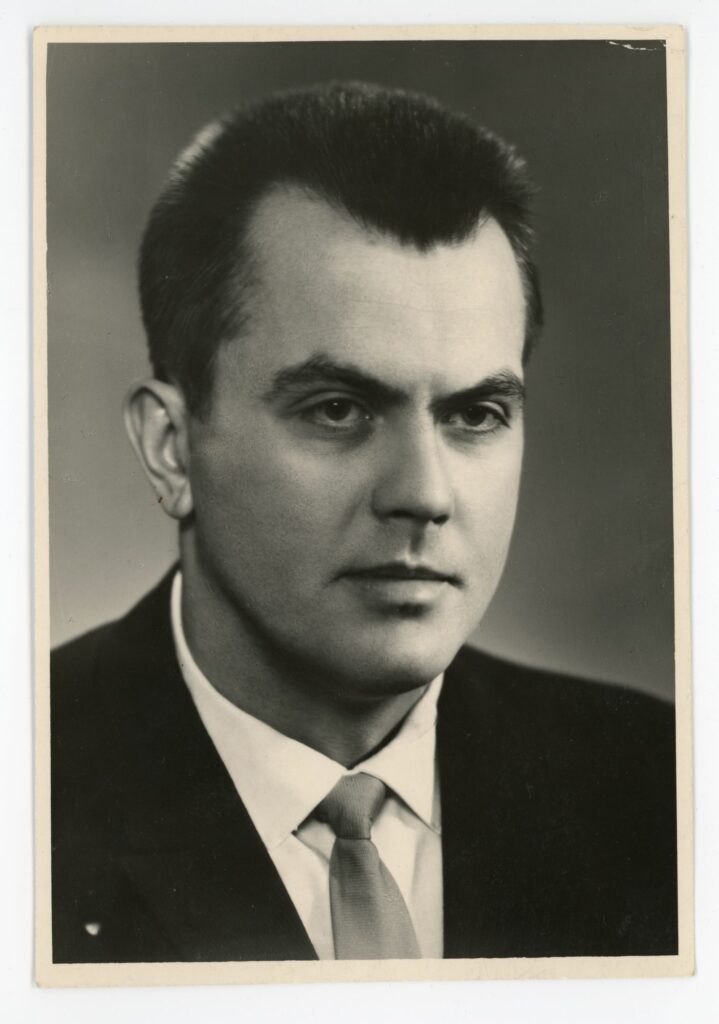
Born in 1936, Nikolai Baturin grew up on the shores of Lake Peipus in Estonia. After his father was deported to Siberia, he lived with his grandfather at the family’s farm, Kaluri. A graduate of the Agricultural Institute, he later studied at naval school and served in the Soviet navy, taking part in several geological expeditions in the taiga. A novelist, poet, playwright and screenwriter, he lived in seclusion on the shores of Lake Võrtsjärv. Inspired by his experiences, Heart of the Bear (1989) was his first novel, masterfully translated into French by Guillaume Gibert. He died in 2019, leaving a significant body of work inspired by his life in the taiga.
Philippe Villard
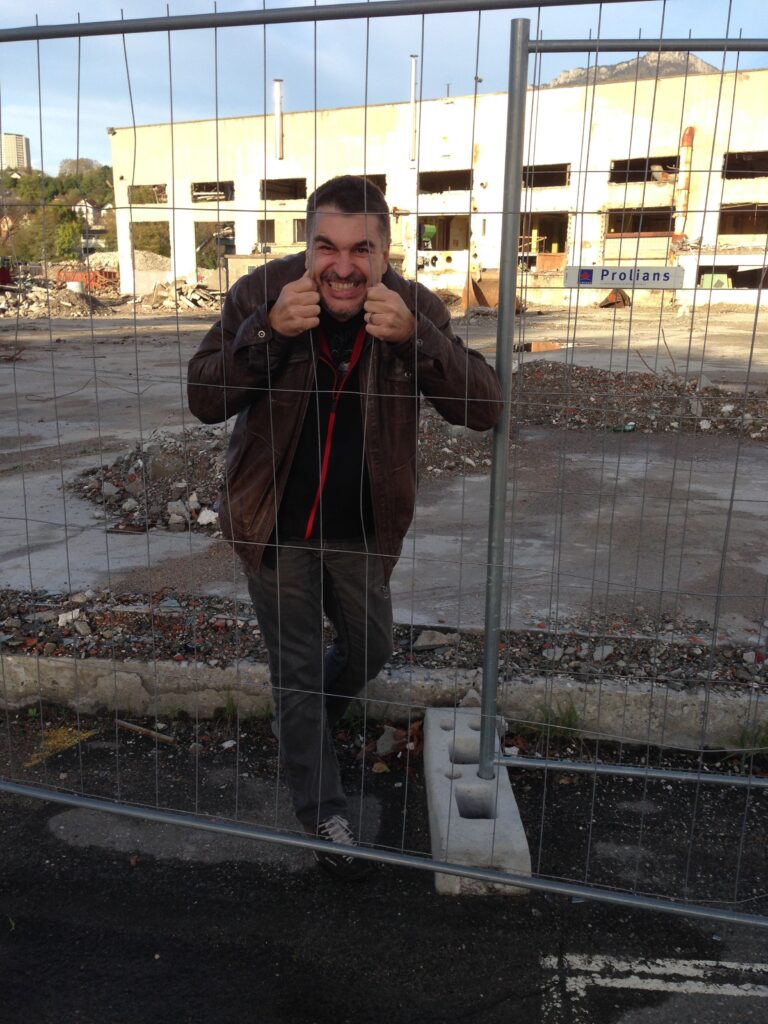
A juggler of words and seeker of meaning, journalism and a love of literature have shaped a professional path marked by human encounters and an insatiable curiosity for the other, for the one from whom one must learn. Since 2017, he has been the editorial director of La Tribune de Genève.
Publication note
This text was first published online in French on 26 October 2025 on Philippe Villard’s personal website. It was subsequently published, also in French, on 3 January 2026, in the Swiss newspapers 24 Heures (Lausanne) and Tribune de Genève (Geneva). This English version appears in EstLit with the author’s permission.